
Mastering SMT Reflow Oven Selection: A Comprehensive How-To Guide for High-Mix Electronics Manufacturing
The SMT reflow oven is often described as the heart of the surface mount technology line, a critical component where the precise application of thermal energy determines the final quality and reliability of the assembled PCB. For procurement specialists and manufacturing engineers, selecting the right reflow oven is a complex decision that goes far beyond temperature specifications. This guide provides a detailed, step-by-step framework for evaluating and selecting an SMT reflow oven that aligns with your production needs, budget, and long-term strategic goals.
Common Pitfalls in Reflow Oven Procurement
Many purchasing decisions are derailed by focusing on the wrong metrics. A common mistake is prioritizing the lowest upfront cost without considering the total cost of ownership (TCO), which includes energy consumption, maintenance, nitrogen usage (if applicable), and yield losses from poor thermal performance. Another frequent error is over-specifying for current needs—investing in a 14-zone oven for simple, low-mix production—or under-specifying, purchasing a basic oven that cannot handle future, more complex board designs or higher throughput requirements. Neglecting to verify critical support elements like local technical service availability, spare parts logistics, and the supplier's process expertise can lead to significant downtime and production bottlenecks.
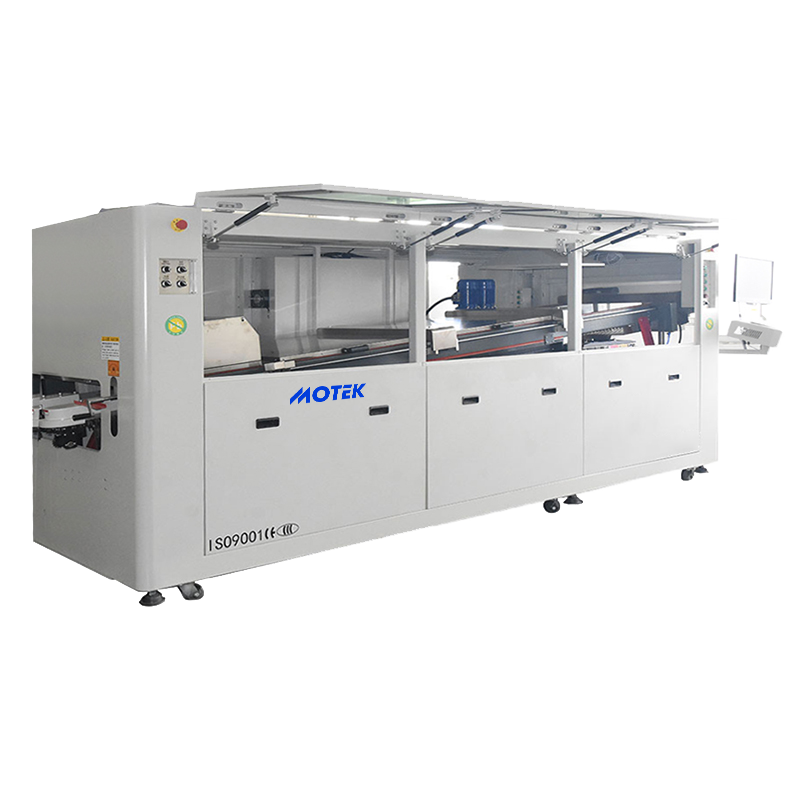
Figure: A modern reflow soldering system, a key component in any SMT turnkey solution.
A 5-Dimensional Evaluation Framework for SMT Reflow Ovens
To make an informed decision, evaluate potential suppliers and their equipment across these five core dimensions:
1. Technical Performance & Process Capability
- Thermal Profiling Flexibility: Assess the number of heating and cooling zones. For high-mix manufacturing involving complex boards with large thermal mass differences (e.g., mixed RF shields, large BGAs, and small 0201 components), a minimum of 10-12 zones is recommended for precise control.
- Heating Technology: Compare forced convection (standard for most applications) vs. IR or vapor phase. Forced convection with turbulent flow provides excellent temperature uniformity and is suitable for lead-free soldering.
- Nitrogen Capability: Determine if your process requires a low-oxygen environment (<1000ppm O2) for no-clean fluxes or advanced packaging. Evaluate the oven's sealing efficiency and nitrogen consumption rates, as this is a major operational cost.
- Process Repeatability & Control: Scrutinize the controller's sophistication, the accuracy of thermocouples, and the software's ability to create, store, and automatically recall profiles for different products.
2. Throughput, Footprint & Integration
- Board Size & Conveyor Width: Ensure the oven's maximum and minimum PCB dimensions accommodate your current and anticipated future product sizes. A common choice is a 400mm conveyor.
- Production Speed: Calculate the required throughput in boards per hour, considering the oven's maximum belt speed and the length of the thermal profile needed for your products.
- Line Integration: The oven must physically and electronically integrate with upstream equipment like the solder paste printer and pick and place machine, and downstream systems like an AOI automatic optical inspection station. Verify compatibility of conveyor height and communication protocols (e.g., SMEMA).
3. Reliability, Maintenance & Total Cost of Ownership (TCO)
- Build Quality & Component Sourcing: Inspect the robustness of the chassis, belt drive mechanism, and fan motors. High-quality components reduce mean time between failures (MTBF).
- Ease of Maintenance: Look for features like tool-free access panels, easy belt tracking adjustment, and a design that facilitates cleaning to prevent flux contamination buildup.
- Energy Efficiency: Modern ovens with improved insulation and efficient heating elements can significantly reduce electricity costs. Calculate the potential savings over 5 years.
- Spare Parts Availability & Cost: A reliable supplier should have a well-stocked inventory of common wear parts (belts, heaters, fans) and provide clear pricing.
4. Supplier Credentials & Technical Support
- Certifications: Insist on suppliers with international quality and safety certifications. For example, a reputable provider like Motek holds ISO 9001:2015 certification for its quality management system and relevant machinery directives for compliance in key export markets.
- Process Engineering Support: The best suppliers offer more than hardware. They provide SMT line optimization service and SMT production troubleshooting expertise. Can they help you develop optimal thermal profiles for challenging boards?
- After-Sales Service Network: For global manufacturers, verify the supplier's ability to provide timely technical support, whether remotely or through local/regional service partners.
5. Scalability & Future-Proofing
- Modularity & Upgrades: Can the oven be easily upgraded later, for example, by adding nitrogen injection or extra cooling modules?
- Software & Data Connectivity: In the era of Industry 4.0, evaluate the oven's software for data logging, remote monitoring, and integration with Manufacturing Execution Systems (MES). This is crucial for traceability and process control in a high-mix electronics manufacturing line.
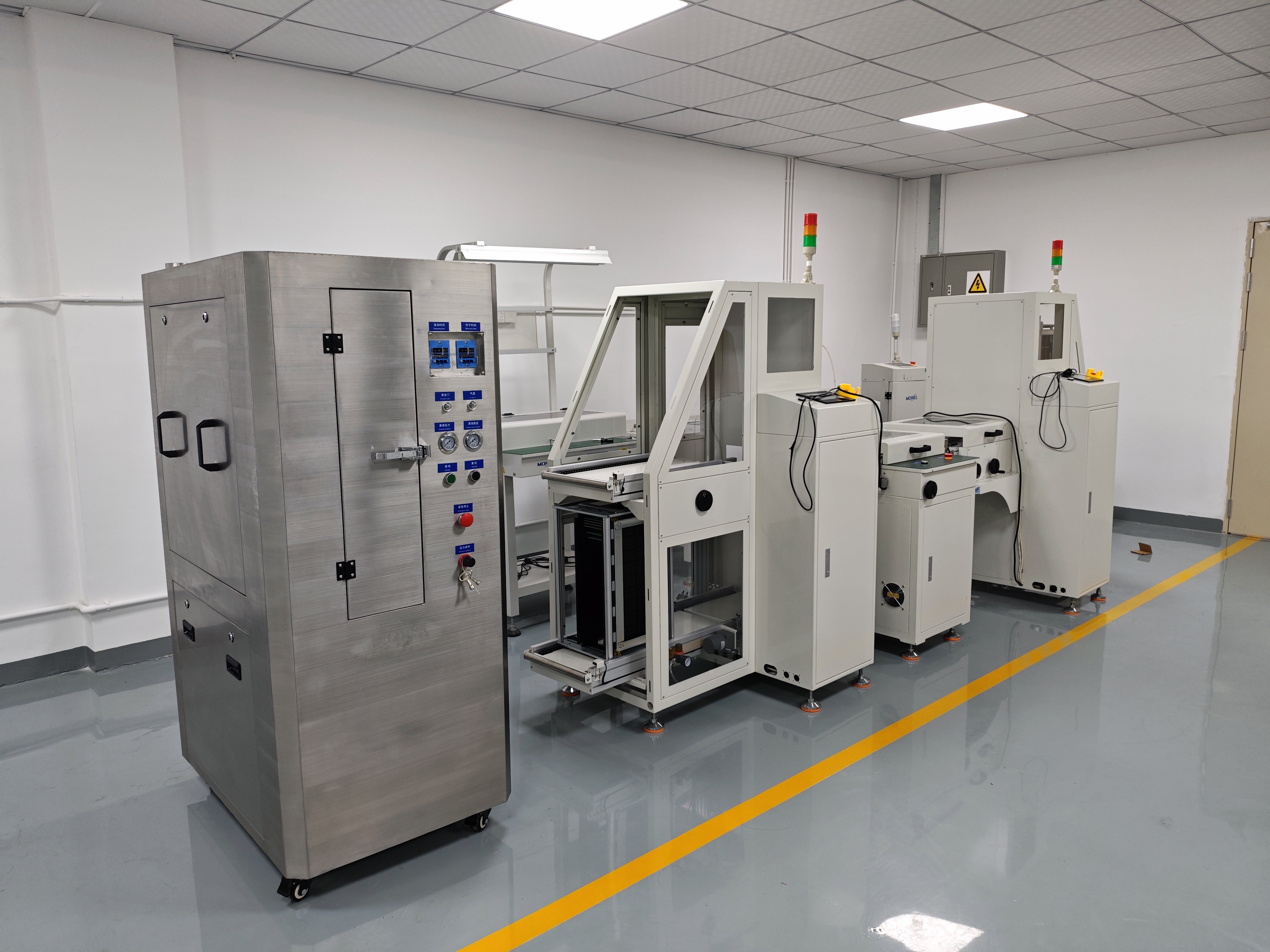
Figure: A view of a modern SMT production floor, highlighting the integration of various machines in a turnkey line.
The Advantage of Sourcing from Integrated SMT Solution Providers
While standalone oven manufacturers exist, there is a compelling case for sourcing from integrated SMT turnkey solution providers. These suppliers, often with deep roots as equipment specialists, understand how the reflow oven interacts with every other element of the line. A company like Motek, with over 15 years of evolution from supplying SMT nozzle replacement for Fuji Yamaha JUKI and SMT feeder 8mm 12mm 24mm to becoming a one-stop provider, brings a holistic perspective. They can ensure the reflow oven is perfectly matched to the output speed of your Yamaha SMT mounter YSM series or Fuji NXT SMT solution, and its thermal performance is complemented by the inspection capabilities of your chosen Inline SPI inspection machine and X-ray BGA inspection machine.
This integrated approach mitigates integration risks. For instance, a provider with hands-on experience knows the precise conveyor height and signal requirements to seamlessly connect an oven between a PCB loader unloader and a PCB depaneling router. Their process knowledge is invaluable for SMT line optimization service, ensuring the entire line, including the reflow process, works in harmony for maximum yield and efficiency.
Practical Application: Evaluating a Supplier's Capability
Consider a scenario where an EMS factory SMT line needs to upgrade its reflow capability for a new contract involving complex automotive boards. During evaluation, they engage with Motek. Beyond presenting oven specifications, Motek's team discusses:
- Their experience in providing SMT turnkey solution for similar high-reliability applications.
- How their oven's thermal stability supports the stringent requirements following AOI automatic optical inspection.
- The availability of their SMT production troubleshooting team to assist with profile development and process validation.
- Their certified processes, highlighted by their ISO 9001:2015 and machinery directive attestations, ensuring equipment compliance for global deployment.
This depth of conversation, rooted in practical high-mix electronics manufacturing line experience, provides greater confidence than a simple datasheet comparison.
Implementation Checklist: From Selection to Operation
- Define Requirements: Document your current and future board types, volumes, solder pastes, and quality standards.
- Shortlist Suppliers: Focus on providers with proven experience in your industry segment and who offer comprehensive support.
- Request a Live Demo or Profile Test: If possible, send sample boards to the supplier for a live thermal profiling test. This is the ultimate validation of performance.
- Conduct a TCO Analysis: Model all costs over 5-7 years, including purchase price, installation, utilities, maintenance, and estimated cost of downtime.
- Verify Support & Training: Confirm the details of installation, operator training, and the response protocol for technical support.
- Plan for Integration: Work with the supplier to detail the physical and software integration plan with your existing or new SMT buffer conveyor, PCBA cleaning machine, and other line equipment.
Selecting an SMT reflow oven is a strategic investment that impacts product quality, manufacturing flexibility, and operational costs for years. By moving beyond basic specifications and applying a structured evaluation framework that emphasizes technical synergy, supplier capability, and lifecycle costs, electronics manufacturers can secure a thermal processing solution that not only meets today's demands but also adapts to tomorrow's challenges. Partnering with an experienced, integrated SMT turnkey solution provider can streamline this complex process, turning a critical procurement decision into a foundation for manufacturing excellence.
For further technical consultation on SMT reflow oven integration or SMT line optimization service, you can reach out to industry experts.
Motek
Tel: +86-755-21635007
WhatsApp/WeChat: +86 199 2455 0176
Email: sales@morequip.com
Website: www.morequip.com
Have Questions or Need More Details?
Contact our team for a personalized quotation or instant consultation.
Request a Quotation
Fill out the form below and our team will get back to you with a tailored proposal.
WhatsApp Direct Chat
Prefer to chat in real-time? Message us on WhatsApp for instant assistance & quick answers.
- Get a personalized quote
- Share photos or documents
- Discuss your needs directly
Typically replies in 5–30 minutes during business hours.