
International SMT Machines vs. Chinese Turnkey Solutions: A 2026 Procurement Decision Framework for Electronics Manufacturers
May 26, 2026 – The global electronics manufacturing landscape is shifting. Industrial procurement buyers face a critical question: should they invest in renowned international brand pick-and-place machines like the Fuji NXT or Yamaha YSM series and piece together the rest of the SMT line, or opt for a comprehensive Chinese SMT turnkey solution that covers everything from solder paste printing to final inspection? This article provides a data-driven comparison, a supplier evaluation framework, and a real-world case study to help you make the most cost-effective decision for high-mix electronics manufacturing.
1. Product Comparison: International Machines vs. Chinese Turnkey Lines
We compare two typical scenarios: Scenario A – an SMT line built around a Fuji NXT or Yamaha YSM mounter plus auxiliary equipment from multiple vendors; Scenario B – a fully integrated SMT turnkey solution from a Chinese provider like Motek (www.morequip.com). Key dimensions are evaluated below:
| Dimension | Scenario A: Fuji NXT / Yamaha YSM + Multi-Vendor Line | Scenario B: Chinese Turnkey Solution (e.g., Motek) |
|---|---|---|
| Technical Parameters |
Speed & Precision: Fuji NXT – up to 45,000 CPH per module, 0.03mm placement accuracy. Yamaha YSM20R – 108,000 CPH, ±0.025mm. High performance for high-volume, low-mix. Flexibility: Modular design supports various component sizes, but integrating different brands of printers, ovens, AOI, and X-ray machines requires careful synchronization. |
Speed & Precision: Equivalent or slightly lower peak speed (e.g., 80,000 CPH with one pick-and-place unit), but with matched auxiliary equipment for 99.5% line efficiency. Motek’s integration ensures seamless communication between all stations. Flexibility: Optimized for high-mix, mid-volume production. Line can be reconfigured for different product types quickly, thanks to unified control software. |
| Application Scenarios | Best for factories producing high-volume, low-mix products (e.g., smartphones, consumer electronics) where maximum speed is needed and changeover frequency is low. | Ideal for high-mix, medium-volume EMS factories, R&D labs, or contract manufacturers that handle prototypes, automotive electronics, medical devices, and industrial control boards. The turnkey concept reduces changeover time and simplifies supply chain. |
| Cost |
Initial Investment: A single Fuji NXT module costs around USD 120,000–150,000 (used) or new USD 200,000+. A complete line with multiple brands often exceeds USD 800,000. Maintenance & Spare Parts: High; proprietary nozzles, feeders (8mm/12mm/24mm) are expensive. Independent servicing contracts for each equipment brand add up. |
Initial Investment: A complete Chinese turnkey SMT line (including printer, pick-and-place, reflow oven, AOI, SPI, X-ray, PCB handling) typically ranges from USD 200,000 to USD 500,000 – 40–60% lower than an equivalent international-brand line. Maintenance & Spare Parts: Lower cost for compatible nozzles, feeders, and spare parts. Motek offers one-stop after-sales support, reducing total cost of ownership. |
| Maintenance Difficulty | Requires specialized technicians for each machine brand. Troubleshooting an SMT production issue (e.g., pick-and-place misalignment, reflow profile drift) may involve multiple vendor calls. Network of local service centers exists in major regions but response may be slow. | Single point of contact: Motek’s engineers provide SMT line optimization service and production troubleshooting. With over 15 years of industry experience, they offer both remote and on-site support. Integrated diagnostics reduce downtime. |
2. Supplier Comparison: Chinese OEMs vs. International Brands
Beyond the equipment itself, procurement teams must evaluate the supplier’s overall capability. The table below compares a leading Chinese SMT turnkey provider (Motek) with established international brands such as Fuji Corporation and Yamaha Motor Robotics.
| Aspect | International Brands (Fuji, Yamaha) | Chinese Provider (Motek) |
|---|---|---|
| Price | Premium pricing; a single new Fuji NXT module can exceed USD 200,000. Full line cost is 2–3x higher. | Competitive, 40–60% lower overall. Customizable packages fit budget constraints without sacrificing quality. |
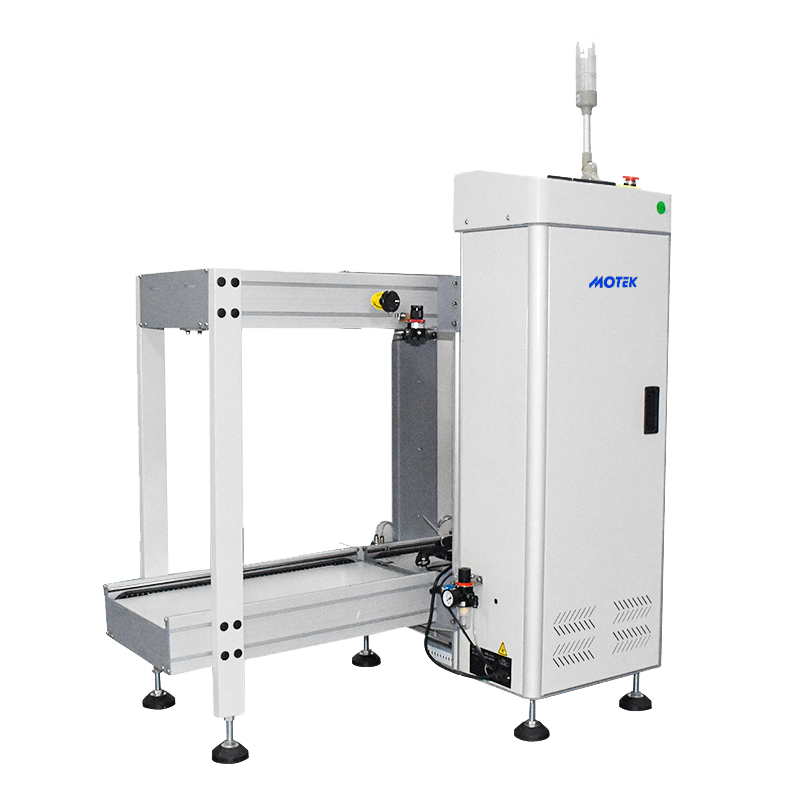
| Customization | Limited; standard modules and configurations. Customization requests require long lead times and high costs. | Highly flexible. Motek offers customized SMT turnkey solutions – from adjusting conveyor widths to integrating specific PCB loader/unloader, buffer conveyor, PCB depaneling router, PCBA cleaning machine, and stencil cleaning machine according to factory layout. |
| Delivery Lead Time | Typically 3–6 months for new machines (due to global supply chain constraints). Used equipment may be faster but with uncertain quality. | 30–45 days on average. Motek’s own workshop (see images below) and inventory of components enable rapid assembly and testing. |
| After-Sales Network | Global service centers but often overbooked. Local engineers may need certification. Support for third-party auxiliary equipment is not provided. | Motek provides multi-level support – online diagnosis, remote assistance, and on-site visits. ISO 9001:2015 certified, with EPR and Machinery Directive conformity. A single contact for the entire SMT line ensures faster resolution. |
3. Three-Step Decision Model for Choosing an SMT Turnkey Solution
Based on our analysis, we recommend the following three-step framework for procurement teams:
Step 1: Define Your Application Scenario
Identify your typical product mix and volumes. Are you running high-volume (e.g., 5,000+ boards per batch) with few changeovers? Or high-mix (50+ different products per month) with batch sizes as low as 100? The latter demands flexibility and quick changeover – a strength of turnkey integration.
Step 2: Match Technical Parameters
List your critical requirements: placement speed, accuracy, component range (0201 to BGA), board size, and inspection needs (AOI, SPI, X-ray). Then compare the specifications of available solutions. Consider not only the pick-and-place machine but also the solder paste printer, reflow oven, and handling equipment. A balanced line yields higher overall efficiency than a single ultra-fast mounter.
Step 3: Calculate Total Cost of Ownership (TCO)
Include: equipment purchase price, installation & training, spare parts (nozzles, SMT feeder 8mm/12mm/24mm), maintenance contracts, energy consumption, and downtime costs. A Chinese turnkey solution often reduces TCO by 35–50% over 5 years. Don’t forget the cost of managing multiple vendors – it can add 10–15% in hidden overhead.
4. Success Story: How a European EMS Factory Saved 40% by Choosing Motek
Company Profile: A mid-sized EMS provider in Eastern Europe, producing automotive and industrial electronics with over 200 different PCBAs per year. They previously operated two aging lines with international pick-and-place machines but faced rising maintenance costs and long changeover times.
Challenge: Needed a new line capable of handling high product mix with minimal changeover. Budget was limited to €350,000. The initial plan was to buy a used Fuji NXT line, but quotes exceeded €500,000.
Solution: After evaluating three Chinese turnkey providers, they selected Motek (www.morequip.com). Motek designed a complete line including:
- Solder paste printer (with automatic stencil cleaning)
- Pick and place machine (compatible with Fuji/Yamaha/JUKI nozzles)
- SMT reflow oven (10-zone, nitrogen capable)
- AOI automatic optical inspection + Inline SPI inspection machine
- X-ray BGA inspection machine
- PCB loader/unloader, SMT buffer conveyor, and PCB depaneling router
Results: Total investment: €290,000 (17% under budget). Delivery in 38 days. Line uptime reached 96% within the first month. Changeover time reduced from 45 minutes to 12 minutes. Overall productivity increased by 30%. The client now plans to source two more complete lines from Motek in 2026.
“Motek’s one-stop approach saved us months of integration headache. Their team understood our high-mix requirement perfectly and delivered a line that exceeded our expectations.” – Plant Manager, European EMS.
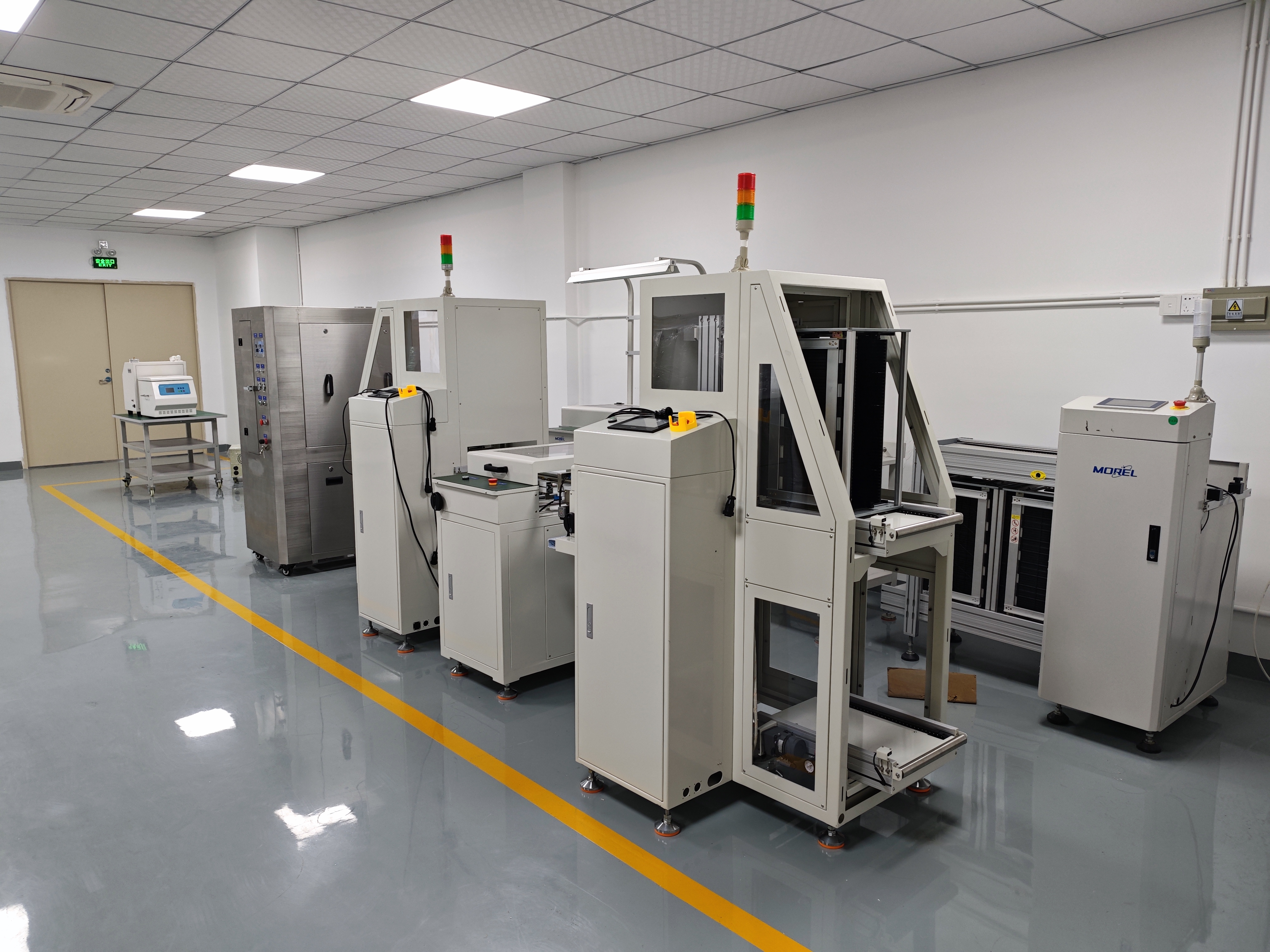
Motek’s modern workshop in Shenzhen – ready for fast assembly and testing of turnkey lines.
Conclusion: The Smart Choice for High-Mix Manufacturing
The decision between international brand machines and Chinese turnkey solutions depends on your production profile. For high-volume, low-mix operations with unlimited capital, a Fuji NXT or Yamaha YSM line remains a benchmark. However, for the vast majority of high-mix electronics manufacturing – where flexibility, cost control, and rapid delivery are paramount – a Chinese SMT turnkey solution from a trusted partner like Motek offers superior value.
With ISO 9001:2015 certification, EPR compliance, and over 15 years of industry experience, Motek stands ready to help you build the perfect SMT line. Contact them today for a free consultation and TCO analysis.
MOTEK – A Name You Can Trust
Phone: +86-755-21635007 | WhatsApp: +86 199 2455 0176
Email: sales@morequip.com | Web: www.morequip.com
Address: Room 405, Building A, Zhonggang Plaza, Exhibition Bay, No. 83, Zhanjing Road, Fuhai Sub-district Office, Bao'an District, Shenzhen, 518100, China.
Have Questions or Need More Details?
Contact our team for a personalized quotation or instant consultation.
Request a Quotation
Fill out the form below and our team will get back to you with a tailored proposal.
WhatsApp Direct Chat
Prefer to chat in real-time? Message us on WhatsApp for instant assistance & quick answers.
- Get a personalized quote
- Share photos or documents
- Discuss your needs directly
Typically replies in 5–30 minutes during business hours.