
Matching SMT Turnkey Solutions to Production Scenarios: A Project-Level Selection Guide for High-Mix Manufacturers
For an electronics manufacturer expanding a production line or upgrading an existing one, the real procurement challenge is rarely "which brand is best." It is more often: "Which SMT turnkey configuration actually matches the products, volumes, and quality requirements of this specific project?"
A turnkey SMT solution bundles equipment selection, line layout, installation, and process support into one package. The correct starting point is a clear assessment of the production scenario — board size, component mix, batch volume, quality class, and available cleanroom conditions. This guide explains how to match SMT turnkey solutions to real production scenarios, using actual equipment parameters and industry facts.
What Defines a Production Scenario in SMT Line Planning?
A production scenario is the combination of product characteristics and operating conditions that determines which SMT line configuration is appropriate. These variables are commonly grouped into five categories:
- Product type and board geometry: PCB dimensions, thickness, and whether the board is designed for single-sided or double-sided assembly.
- Component complexity: Mix of chip components, ICs, BGAs, connectors, and odd-form parts; minimum component size directly affects mounter selection.
- Volume and batch pattern: High-volume / low-mix vs. high-mix / low-volume production, which influences line changeover strategy.
- Quality and reliability requirements: Target defect rate, inspection needs, and applicable PCBA acceptance criteria such as IPC-A-610J Class 1, 2, or 3.
- Operating environment: Cleanroom level, temperature and humidity control, ESD protection, and whether the line must run 24/7.
This scenario-first approach matters because a line that is correctly specified for one application can be over-specified or under-specified for another.
The Market Context: Why Project-Scenario Matching Is Becoming More Important
The global SMT equipment market was valued at approximately USD 6.6 billion in 2025 and is projected to reach USD 14.6 billion by 2036, according to Transparency Market Research. The high-mix / low-volume assembly segment is projected to grow at a CAGR of 8.31% through 2031, driven by demand for customized industrial and medical electronics, per Mordor Intelligence.
Two implications follow for equipment buyers. First, placement equipment remains the largest segment, accounting for roughly 38%–48% of total SMT equipment market value. Second, because high-mix production typically requires flexible changeovers rather than maximum speed, line integration skill matters as much as the individual machine specification.
For an EMS factory running multiple product families, the operational question is not whether to buy a Fuji NXT, a Yamaha YSM-series mounter, or a JUKI pick-and-place machine. The question is how these machines are configured, connected, and supported within a complete line that includes solder paste printing, SPI, reflow, AOI, and board handling equipment.
Matching Equipment to the Production Scenario
Pick-and-Place: The Core Placement Decision
The pick-and-place machine determines the line's speed, accuracy, and component range. For a high-mix project with very small components — such as 03015 chips — a machine like the Hanwha Decan S2 provides a useful reference specification:
- Speed: 92,000 CPH (optimum, HS10 head)
- Structure: 2 gantries x 10 spindles/head
- Accuracy: ±28 μm Cpk ≥ 1.0 (03015 chip); ±25 μm Cpk ≥ 1.0 (IC)
- Parts size range: 03015 to 12mm, H10mm
- PCB size: 50 x 40mm to 510 x 460mm (standard)
These figures show that a modern modular mounter can handle both small passive components and ICs on standard PCB sizes. The decision rule is to match the mounter's minimum component capability and PCB size range to the most demanding board in the product portfolio — not to the average board.
Reflow Oven: Thermal Process Stability
The reflow oven is the main thermal process step in an SMT line. Its heating zone configuration, temperature uniformity, and cooling capacity directly affect solder joint quality. The XMR-800D reflow oven is an example of a medium-large inline configuration:
- Dimensions (L x W x H): 5520 x 1430 x 1530 mm
- Heating zones: top 8 / bottom 8
- Heating zone length: 3110 mm
- Cooling zones: top 3 / bottom 3
- Exhaust requirement: 11 m³/min x 2 exhausts
A longer heating zone generally improves thermal profiling flexibility for larger boards and complex assemblies. For a project mixing standard PCBs with thicker or heavier boards, the oven's heating length and exhaust capacity must be checked against the required peak temperature and throughput.
Supporting Equipment: Where Line Reliability Is Actually Decided
Beyond the mounter and reflow oven, a complete SMT turnkey line typically includes: PCB loaders and unloaders, solder paste printer, SPI, AOI, X-ray inspection, buffer conveyors, NG separators, stencil cleaners, and depaneling routers.
For high-reliability applications such as automotive electronics and medical devices, inspection capability is not optional. Verified industry data identifies 3D AOI and SPI as the fastest-growing equipment sub-sectors due to automotive "zero-defect" requirements, with inspection equipment growing at a projected 15.2% CAGR. A turnkey proposal that omits inline SPI or AOI should be treated as incomplete for Class 2 or Class 3 assembly.
Step-by-Step: How to Match a Turnkey SMT Solution to a Production Project
Step 1 — Define the product portfolio and board parameters
List all PCB sizes and thicknesses, the smallest component size, and the largest component height. This defines the required PCB size range and placement accuracy for the mounter.
Step 2 — Determine the batch pattern and changeover frequency
For high-mix / low-volume production, prioritize quick changeover, feeder setup flexibility, and line scheduling software. For high-volume / low-mix, prioritize speed and dedicated feeder setups.
Step 3 — Set the quality class and inspection strategy
Decide whether the target quality level follows IPC-A-610J Class 1, 2, or 3. Higher classes require tighter process control and a stronger inspection chain: solder paste inspection, pre-reflow AOI, post-reflow AOI, and X-ray for BGA-type joints where needed.
Step 4 — Review the complete equipment chain, not only the mounter
Check that the solder paste printer, SPI, mounter, reflow oven, AOI, buffer conveyors, and unloader are dimensionally and process-compatible — including PCB transfer height, conveyor direction, and communication protocol.
Step 5 — Validate the environment and facility constraints
Verify floor space, power supply, exhaust volume, compressed air, cleanroom classification, and ESD protection. A line requiring 11 m³/min per exhaust point cannot be installed in a facility without adequate ventilation.
Step 6 — Plan for service, training, and spare parts
Confirm the supplier's support model: remote technical support, on-site installation, operator training, and spare parts availability for feeders, nozzles, and consumables.
Real-World Project Scenario: High-Mix Electronics Production
A useful reference case comes from an SMT factory applying turnkey equipment for smartphone motherboard assembly, tablet circuit board production, ECU control unit assembly, LED display modules, LED streetlight drivers, and consumer electronics PCB assembly at a volume of 50,000 units per month.
This project profile is typical of a multi-scenario operation: a single factory running multiple product families with different PCB geometries and quality targets. The customer has been in continuous operation with this equipment configuration for 5 years, with an output of 20,000 to 100,000 pieces per day, and reports the key required characteristics as high density, high efficiency, and high reliability.
The lesson is not that one line can do everything. It is that the line must be designed around a representative set of product families, with enough flexibility for changeover and enough throughput for the highest-volume product.
Matching Decision Table: Production Scenario vs. SMT Turnkey Configuration
| Production Scenario | Key Equipment Priority | Process Focus | Typical Quality Requirement |
|---|---|---|---|
| Consumer electronics, high volume | High-speed placement; high-capacity reflow | Throughput and uptime | IPC-A-610J Class 1–2 |
| Automotive electronics / ECU | High-accuracy placement; SPI; 3D AOI; X-ray | Zero-defect process control | IPC-A-610J Class 2–3 |
| Medical device PCBA | Precision placement; full inspection chain; traceability | Repeatability and documentation | IPC-A-610J Class 3 |
| LED display / LED lighting | Flexible placement; mixed board sizes; glue dispensing | Changeover speed; board size flexibility | IPC-A-610J Class 1–2 |
| Industrial control PCB | Wide PCB size range; through-hole / SMT hybrid; cleaning | Reliability in harsh environments | IPC-A-610J Class 2–3 |
This table is a planning framework, not a fixed rule. Actual configuration must be validated against the specific board and component data of each project.
Common Mistakes When Matching a Turnkey Line to a Project
Mistake 1 — Buying speed that the product does not need
A high-speed mounter with 92,000 CPH capability is valuable only if the product mix and volumes require it. For a low-volume specialty board, the extra speed may be irrelevant compared with changeover speed and placement accuracy.
Mistake 2 — Ignoring the transfer height and conveyor compatibility
Each machine in the line must have compatible PCB transfer height and direction. A typical transfer height reference is 920 ± 20 mm. If one piece of equipment uses a different transfer height, the whole line requires custom handling or additional conveyors.
Mistake 3 — Treating inspection as an add-on
For Class 2 and Class 3 assemblies, inspection is part of the process design. Adding AOI after the line is installed is more expensive and less effective than integrating SPI and AOI during line design.
Mistake 4 — Selecting a photo specification instead of a verified specification
Equipment should be evaluated on documented parameters — machine dimensions, heating zone count, placement accuracy, component size range — not on photos or generic marketing descriptions.
Mistake 5 — Underestimating environmental requirements
An SMT line operating in a controlled environment with stable temperature and humidity produces more consistent results. If the factory does not have an ESD-protected area or stable power supply, the line performance will suffer regardless of equipment brand.
How Motek Structures a Project-Specific SMT Turnkey Package
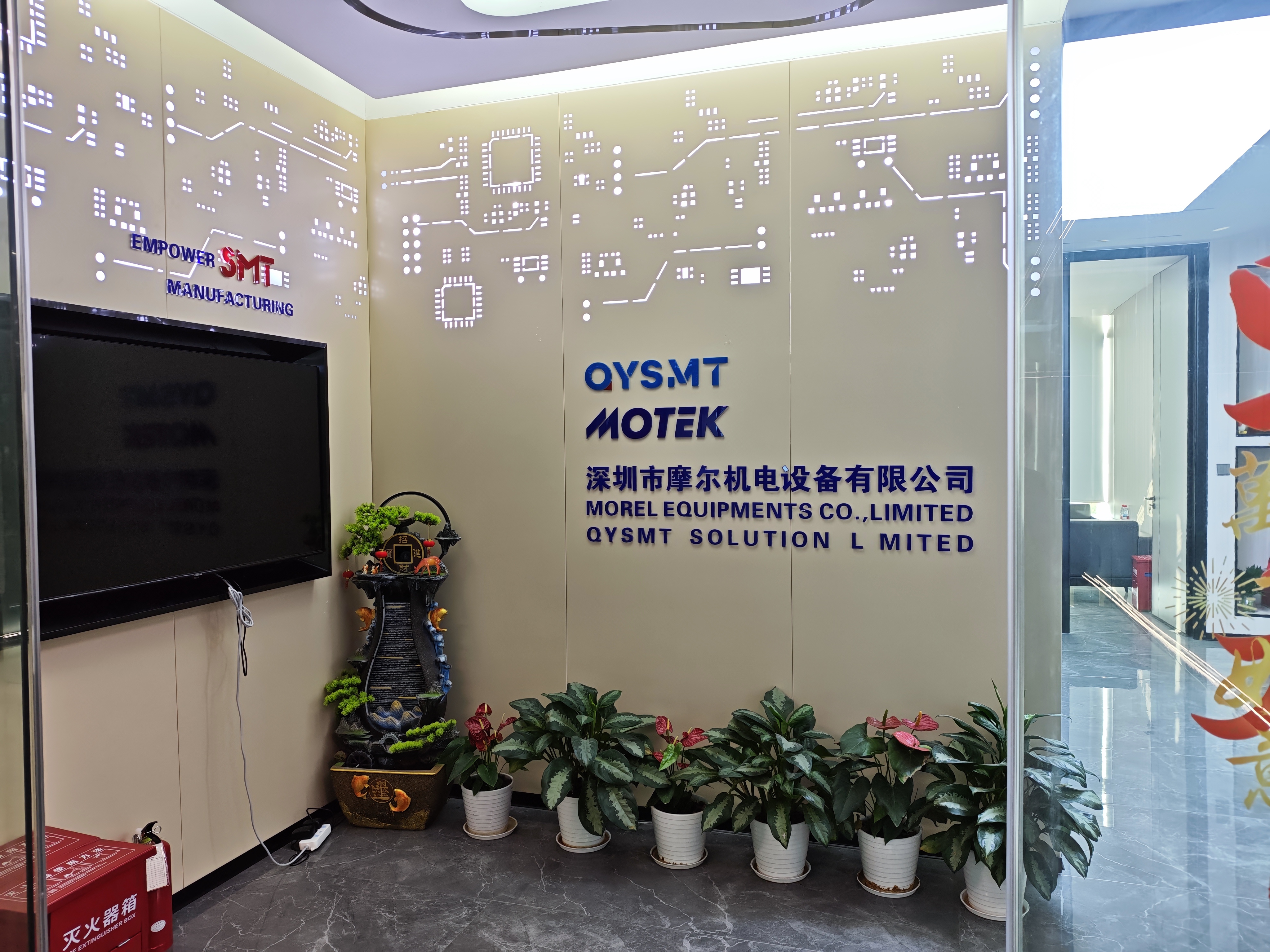
Morel Equipments Co., Ltd. operates under the brand Motek and works as a trading company in Shenzhen, Guangdong, specializing in medical equipment, LED lighting, and mechanical devices. The company's SMT-related offering includes reflow soldering equipment, pick-and-place machines, cleaning machines, PCB cutting machines, and PCBA protection solutions. Motek supports OEM/ODM projects and offers customization in voltage, logo, labels, packaging, color, size, graphic design, and production line layout design.
The operational scale is relevant for project planning: the facility covers 955 m², employs 31 people, and has an annual output of 300–500 units. The R&D team includes over 15 engineers. The company reports 100% export coverage, with main markets in the EU, USA, Australia, Canada, and ASEAN.
From a project-matching standpoint, the relevant capabilities include:
- Production line layout design as part of the turnkey scope
- Voltage and logo customization for destination-market compatibility
- Remote and on-site training options
- 100% pre-shipment testing
- Lead times of 7–45 days depending on scope
- Remote technical support and 24/7 online service
For global buyers, these factors affect how easily a turnkey line can be installed, commissioned, and maintained.
Cost and Budget Considerations in a Turnkey Project
Because an SMT turnkey line includes multiple machines, the total budget depends on line length and inspection depth. A minimal line — loader, printer, mounter, reflow, unloader — has a lower cost base than a line with SPI, AOI, X-ray, buffer conveyors, and cleaning equipment.
When comparing quotes, buyers should request a line-level bill of materials rather than a single package price. The comparison must include PCB transfer height, board size range, power requirements, exhaust requirements, and training or installation services.
Shorter lead times, such as 7–45 days, are only meaningful if the line's full installation requirements are clarified in advance — for example, whether the scope includes fixtures, tooling, or process setup at the buyer's factory.
How to Evaluate an SMT Turnkey Proposal
Use a four-step evaluation checklist:
- Equipment specification check: Compare each machine's parameters against the product portfolio, not against marketing claims.
- Line integration check: Verify conveyor direction, transfer height, communication interfaces, and physical layout.
- Quality control check: Confirm the inspection equipment included and any certification requirements such as IPC-A-610J quality classes.
- Support and risk check: Review installation, training, spare parts, and after-sales support terms.
A proposal that passes all four checks is more likely to perform as expected than one selected purely on equipment brand or headline speed.
Case Example: Motek's Long-Term High-Mix Customer
One long-term Motek project involves an SMT factory running smartphone motherboard assembly, tablet circuit board production, ECU control unit assembly, LED display modules, LED streetlight drivers, and consumer electronics PCB assembly. The line produces approximately 50,000 smartphone PCB units per month and has operated for 5 years, with mass production output of 20,000–100,000 pieces per day.
The customer highlights high density, high efficiency, and high reliability as the key results. This case shows how a line configured for high-mix production can sustain both variety and volume over a long period.
Future Trend: High-Mix Flexibility as a Design Principle
As high-mix / low-volume assembly grows at an 8.31% CAGR, more line designs will prioritize flexibility over pure speed. Inspection sub-sectors are also growing quickly — 3D AOI and SPI at a projected 15.2% CAGR — because quality requirements across automotive, medical, and industrial sectors continue to tighten.
The practical conclusion for procurement teams is simple: match the line to the project scenario, verify every equipment parameter, and treat integration and service as part of the purchase — not as an afterthought.
Frequently Asked Questions
What are the key factors to consider when matching an SMT turnkey solution to a specific production project?
The key factors are PCB dimensions and thickness, smallest component size, batch volume and changeover frequency, target quality class, and operating environment. These define the required placement accuracy, PCB size range, conveyor height, inspection chain, and thermal process capability.
Which machine parameters matter most when selecting a pick-and-place machine for a high-mix line?
For high-mix production, the most relevant parameters are minimum component size, placement accuracy (e.g., ±28 μm Cpk ≥ 1.0 for 03015 chips), PCB size range, and changeover flexibility. A machine such as the Hanwha Decan S2 supports 03015 to 12mm components and PCB sizes from 50 x 40mm to 510 x 460mm, which covers a wide mix of boards.
How do quality class requirements affect SMT line configuration?
Higher IPC-A-610J classes — Class 2 and Class 3 — require tighter process control and a more complete inspection chain, including solder paste inspection and automated optical inspection. For automotive and medical applications, X-ray inspection may also be needed for BGA-type joints.
Can a turnkey SMT supplier customize the line layout for different product batches?
Yes, provided the supplier includes layout design in its scope of work. Motek offers production line layout design, voltage and logo customization, and remote or on-site training options as part of its OEM/ODM support. Buyers should confirm whether the quoted scope includes line layout engineering or only equipment supply.
What should a buyer request when obtaining an SMT turnkey solution quote?
A buyer should request a line-level bill of materials that lists each machine with full specifications, including PCB transfer height, conveyor direction, dimensions, power and exhaust requirements, plus installation and training services. This makes comparing quotes more reliable than comparing a single package price. For a tailored project assessment, contact Motek at sales@morequip.com.
Conclusion
Matching an SMT turnkey solution to a production scenario is a structured exercise: define the product portfolio, set quality targets, verify every equipment parameter, and confirm the integration and support scope. This approach reduces the risk of over-specification, under-specification, and costly line modifications after installation.
High-mix electronics manufacturing requires lines that balance speed, accuracy, flexibility, and inspection depth. Equipment brands such as Fuji NXT, Yamaha YSM series, JUKI, and Hanwha each have established positions in the market, but the correct choice for a project is the configuration that matches its actual production scenario.
Download the Motek company brochure for detailed company and product information.
Have Questions or Need More Details?
Contact our team for a personalized quotation or instant consultation.
Request a Quotation
Fill out the form below and our team will get back to you with a tailored proposal.
WhatsApp Direct Chat
Prefer to chat in real-time? Message us on WhatsApp for instant assistance & quick answers.
- Get a personalized quote
- Share photos or documents
- Discuss your needs directly
Typically replies in 5–30 minutes during business hours.