
SMT Turnkey Solution Lifecycle: Choosing a Partner for Long-Term Production Stability
An SMT turnkey solution is often evaluated by the speed of its pick-and-place machine and the precision of its reflow oven. For high-mix electronics manufacturers, the more meaningful evaluation happens after installation: can the supplier keep the line productive with spare parts, technical support, and clear communication? Motek, operated by Morel Equipments Co., Ltd., is a Shenzhen-based SMT equipment and turnkey solution provider founded in 2011, with 100% export exposure across the EU, USA, Australia, Canada, and ASEAN. This article outlines the lifecycle factors to consider when selecting an SMT turnkey solution partner, not only for the initial purchase but also for the years of production that follow.
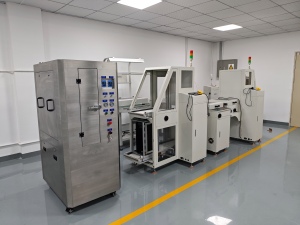
A complete SMT turnkey line requires lifecycle planning, not just equipment delivery.
Problem Definition: The Real Risk Starts After Installation
The real risk starts after installation. A line built with a high-speed pick-and-place machine and a precise reflow oven still depends on consumables, spare parts, and responsive technical support. When a feeder fails or a nozzle is missing, the buyer must know who to call. In high-mix production, changeovers and small-batch runs make this risk even more visible because downtime directly affects delivery schedules. Without a long-term support structure, a turnkey line can turn into a fragmented set of machines from different vendors, with no single point of accountability.
This is especially relevant for EMS factories, which often run many different board types on the same line. A solution that works for a one-product factory may not be suitable for a manufacturer that changes products every week. The turnkey provider therefore needs to understand both the equipment and the production environment.
Industry Background: Why the SMT Market Is Moving Toward Lifecycle Partnerships
The global SMT equipment market was valued at approximately USD 6.6 billion in 2025 and is projected to reach USD 14.6 billion by 2036, according to Transparency Market Research. Asia-Pacific held a 54% revenue share in 2025, reflecting the region's central role in electronics assembly. Placement equipment, represented by pick-and-place machines, is the largest segment, accounting for roughly 38% to 48% of the total market value.
The high-mix/low-volume assembly line segment is projected to grow at a CAGR of 8.31% through 2031, driven by customized industrial and medical electronics, according to Mordor Intelligence. At the same time, 3D AOI and SPI are identified as the fastest-growing inspection sub-sectors due to automotive zero-defect requirements. These trends suggest that buyers are looking not just for raw speed, but for configurable lines that can handle evolving product mixes and quality demands.
Established platform brands such as Fuji, Yamaha, JUKI, and Hanwha are part of this ecosystem. Fuji's NXT platform and Yamaha's YSM series, for example, are recognized as modular mounter platforms for high-speed and high-precision placement. A long-term turnkey partner should be able to integrate these platforms into a coherent line and support the process around them.
Detailed Solution: What a Long-Term SMT Turnkey Solution Should Include
A long-term SMT turnkey solution is about line ownership, not just machine supply. The supplier should take responsibility for equipment selection, quality risk, logistics, training, spare parts, and after-sales support. Motek's model is built around these areas.
Equipment Coverage and Line Integration
Motek's main product categories include reflow soldering, plug-in machines, pick-and-place machines, cleaning machines, PCBA PROTECTOR, and PCB cutting machines. In a full turnkey line, the material flow normally includes PCB loaders and unloaders, solder paste printers, inline SPI, pick-and-place machines, reflow ovens, AOI, X-ray BGA inspection, buffer conveyors, depaneling routers, and PCBA or stencil cleaning systems. Consumables such as 8mm, 12mm, and 24mm feeders, plus nozzles for Fuji, Yamaha, and JUKI heads, should be planned into the spare parts strategy before the line starts production.
Motek's turnkey configurations can include the Hanwha Decan S2 pick-and-place machine, rated at 92,000 CPH optimum with ±28 μm accuracy on 03015 chips and ±25 μm accuracy on ICs; the XMR-800D reflow oven with eight top and eight bottom heating zones and three top and three bottom cooling zones; and the HMH830D automatic online glue dispenser for PCB widths of 50 to 450 mm and transfer speeds up to 5,000 mm/min.
For SMT industrial plants, Motek also positions reflow oven technology against wave reflow soldering. In this comparison, the SMT reflow oven configuration offers a machine warranty difference of 2 years, about 10% lower cost, less maintenance, and higher efficiency with long-term stable production.
Risk Control and Supply Chain Management
Long-term partnerships are built on predictable execution. Motek uses a strict quality inspection process, scratch code management, advance inventory and delivery confirmation, professional packaging, logistics tracking, customs broker assistance, and detailed technical parameter confirmation. For the buyer, these measures reduce three common execution risks: delayed delivery, damaged equipment, and misconfigured line components.
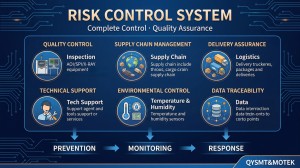
Pre-shipment quality inspection is part of the turnkey risk control process.
After-Sales, Training, and Spare Parts
Once the line is installed, uptime depends on skill and speed. Motek's after-sales structure includes a comprehensive training system, 24/7 technical support, fast repairs, spare parts supply, and a customer communication mechanism. All products are backed by a 12-month warranty. The combination of these elements gives an EMS factory a direct channel for restoring production, rather than coordinating separately with each equipment manufacturer.
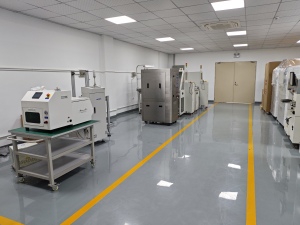
Factory-scale support capabilities are part of a long-term SMT turnkey partnership.
Commercial Terms and Delivery Flexibility
For procurement teams, Motek offers an MOQ of one unit and a range of incoterms: FOB, CIF, EXW, FCA, DDP, and DAF. Acceptance is based on pre-shipment testing. Payment terms are 30% T/T in advance and 70% T/T against a copy of the bill of lading, or 50% T/T in advance and 50% against B/L. This commercial flexibility helps buyers in different regions align the turnkey purchase with their import and financing workflows.
Step-by-Step Breakdown: How to Execute a Long-Term Turnkey Engagement
- Map the full line ecosystem. Document PCB size ranges, component types, throughput requirements, and future product changes. Use this map to create a list of critical consumables: feeders, nozzles, stencil cleaners, and spare conveyor modules.
- Confirm technical parameters in writing. The supplier should confirm placement accuracy, heating zone structure, PCB width range, transfer speed, and utility requirements. Match examples like the Hanwha Decan S2 or XMR-800D to your actual board sets.
- Use pre-shipment testing as a hard acceptance gate. Arrange a test with representative boards to validate placement, reflow profile, and product handling. Motek's standard acceptance method is pre-shipment testing.
- Plan logistics and customs with the supplier. Choose the incoterm, confirm export documentation, and use professional packaging with tracking. Customs broker assistance is part of Motek's risk control process.
- Schedule training before ramp-up. The training system should cover setup, changeover, cleaning, and basic troubleshooting. A trained operator team is one of the strongest defenses against downtime.
- Build a lifecycle review rhythm. Review spare parts consumption, repair cases, and output data with the supplier every quarter or half-year. In high-mix production, the product mix changes, and the line may need rebalancing or upgrade recommendations.
Use Cases: Who Benefits Most from a Lifecycle Turnkey Model
- High-mix/low-volume EMS factories. The ability to switch board types quickly and support small batches is essential. Motek's line configurations cover multiple placement and inspection modules, and the 24/7 support channel helps recover quickly when a new product is introduced.
- Medical, LED, and mechanical device manufacturers. Motek's customer base includes medical equipment, LED lighting, and mechanical devices. For these verticals, cleaning machines and PCBA protection often matter as much as placement speed.
- Export-oriented production plants in the EU, USA, Australia, Canada, and ASEAN. With 100% export activity, Motek is familiar with international documentation, logistics, and delivery terms such as DDP and FCA.
- Distributors and agents evaluating a long-term partnership. An MOQ of one unit enables a low-risk trial, while advance inventory and delivery confirmation reduce the risk of stock gaps when building a distributor pipeline.
Comparison Table: Transactional Purchase vs. Long-Term Turnkey Partnership
| Dimension | Transactional equipment purchase | Motek long-term turnkey partnership |
|---|---|---|
| Scope | Machine supply | Equipment integration, training, after-sales support |
| Warranty | Varies by brand | 12-month warranty on all products |
| Spare parts | Buyer coordinates across brands | Spare parts supply via one channel |
| Support | Depends on manufacturer | 24/7 technical support, fast repairs, customer communication mechanism |
| Logistics | Buyer manages import | Professional packaging, logistics tracking, customs broker assistance |
| Knowledge transfer | Basic documentation | Comprehensive training system |
| Relationship | Ends after commissioning | Periodic line review and support relationship |
FAQ
What compliance documentation and quality controls does Motek provide for SMT turnkey equipment?
Motek holds multiple CE certifications and uses a strict quality inspection process before shipment. Acceptance is based on a pre-shipment test. For PCBA quality, IPC-A-610J defines the current global acceptability classes; a buyer should confirm how the supplier's inspection aligns with the required class. Motek's QA/QC inspection process and scratch code management support traceability during production.
Can Motek deliver a complete SMT line with placement, reflow, printing, and inspection?
Yes. Motek's product scope includes reflow soldering, plug-in machines, pick-and-place machines, cleaning machines, PCBA PROTECTOR, and PCB cutting machines. In practice, a line can be built around models such as the Hanwha Decan S2 for placement, the XMR-800D reflow oven, and the HMH830D automatic online glue dispenser, with additional modules like printers, SPI/AOI, and X-ray selected according to the process.
What are the commercial terms for a turnkey SMT line?
The MOQ is one unit. Motek supports FOB, CIF, EXW, FCA, DDP, and DAF delivery methods. Payment terms can be 30% T/T in advance and 70% T/T against a copy of the bill of lading, or 50% T/T in advance and 50% against B/L. This structure lets buyers balance import risk and cash flow.
Can we run a pre-shipment test or demo before the line is shipped?
Pre-shipment testing is the standard acceptance method. Motek confirms detailed technical parameters before production, then runs a strict quality inspection before shipment. The buyer should arrange the test with representative PCBs to validate placement accuracy, reflow profile, and board handling. If issues are found, Motek's process is to resolve them before shipping.
What long-term support can we expect after installation?
Every product includes a 12-month warranty. After-sales support covers a comprehensive training system, 24/7 technical support, fast repairs, spare parts supply, and a customer communication mechanism. For distributors or factories using the line continuously, this support channel is the component that keeps the SMT turnkey solution productive over time. To discuss your production schedule or ask for a quotation, contact Motek through the website or brochure download link below.
Conclusion
Choosing an SMT turnkey solution is not the end of a procurement process; it is the start of an operational relationship. In high-mix electronics manufacturing, the value of a turnkey partner is measured by how quickly it restores uptime, how cleanly it handles spare parts, and how well it transfers knowledge to the buyer's team. Motek's model addresses these needs through defined equipment integration, pre-shipment quality control, export-oriented logistics, and a post-shipment support structure.
If you are evaluating a turnkey line or preparing for the next capacity expansion, download the Motek company brochure or contact sales@morequip.com. You can also visit Morequip.com to start the conversation.
Have Questions or Need More Details?
Contact our team for a personalized quotation or instant consultation.
Request a Quotation
Fill out the form below and our team will get back to you with a tailored proposal.
WhatsApp Direct Chat
Prefer to chat in real-time? Message us on WhatsApp for instant assistance & quick answers.
- Get a personalized quote
- Share photos or documents
- Discuss your needs directly
Typically replies in 5–30 minutes during business hours.