
How an SMT Turnkey Solution Works: Pick-and-Place, Reflow, and Glue Dispensing
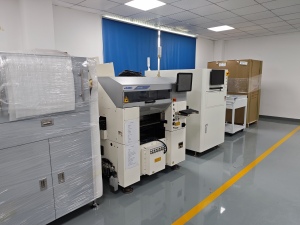
An SMT turnkey solution is a complete surface-mount assembly line delivered as one integrated system: the pick-and-place machine that positions components, the reflow oven that turns solder paste into permanent joints, and the automatic online glue dispenser that applies adhesive inside the same flow, plus the loaders, printers, conveyors, and inspection stations that connect them.
The short answer: a turnkey solution works because every station is sized to the same production target and linked by one material-handling chain. The pick-and-place machine defines speed and placement accuracy, the reflow oven defines joint quality, and the glue dispenser defines how the line handles processes that soldering alone cannot perform.
This explainer is written for buyers who are new to electronics manufacturing and are trying to understand what they are actually purchasing. It walks through the three core components, the equipment that sits between them, and the constraint checks, including parameters, certifications, and integration limits, that determine whether a proposed line is genuinely turnkey.
What "Turnkey" Really Covers, and What It Does Not
"Turnkey" is often read as a commercial term meaning "one invoice." In SMT it is an engineering term. A turnkey solution means a single provider owns the line layout design, equipment selection, integration, commissioning, operator training, and after-sales support, so the buyer receives a production-ready line rather than a shipment of machines.
A turnkey scope typically includes:
- Production line layout design and station sequencing
- Core process equipment: pick-and-place machine, reflow oven, glue dispenser
- Connecting equipment: PCB loader and unloader, buffer conveyor, PCB turner, NG separator
- Quality stations: solder paste printer, inline SPI, AOI, X-ray inspection
- Consumables and tooling: SMT feeders, nozzles, stencil cleaning
- Commissioning, operator training, and remote or on-site technical support
It does not mean the buyer has no responsibility. Site preparation, cleanroom conditions, power, compressed air, and exhaust capacity remain the buyer's scope. In practice, most integration failures happen at exactly that boundary rather than inside the machines themselves.
Problem Definition: Where First-Time Buyers Get Stuck
The most common mistake is treating a turnkey line as a list of machines to be bought independently and connected later. This works only when every machine already matches the others in three dimensions: throughput, board handling, and process compatibility.
Three specific failure modes appear repeatedly:
- Takt-time mismatch. A high-speed mounter feeding a slow oven produces work-in-process inventory, not output.
- Board-handling mismatch. If the conveyor height, board width range, or transfer direction of one station does not match its neighbours, the line cannot run in a single automatic flow.
- Process gaps. Some assemblies need adhesive, underfill, or protective dispensing in addition to soldering. A line with no dispensing station cannot complete those products at all.
These are the constraints a turnkey provider is supposed to resolve before delivery, by selecting equipment against a single line specification rather than optimising each machine in isolation.
Industry Background: Why Integrated Lines Matter More Than Ever
Surface mount technology is a large and still-expanding equipment category. The global SMT equipment market was valued at approximately USD 6.6 billion in 2025 and is projected to reach USD 14.6 billion by 2036, according to Transparency Market Research. Asia-Pacific held a 54% revenue share of that market in 2025.
Placement equipment, meaning pick-and-place machines, is the single largest equipment segment, accounting for roughly 38% to 48% of total SMT equipment market value, based on Persistence Market Research and Cognitive Market Research estimates. That share explains why most turnkey conversations begin with the mounter.
The more important structural change is in mix. The high-mix and low-volume assembly segment is projected to grow at a CAGR of 8.31% through 2031, driven by demand for customised industrial and medical electronics, according to Mordor Intelligence. Meanwhile, inspection is the fastest-growing equipment sub-sector: 3D AOI and inline SPI are identified at a 15.2% inspection CAGR, driven by automotive zero-defect requirements.
For buyers, the implication is direct. Lines that were designed for a single high-volume product are increasingly asked to handle many products with different board sizes, component counts, and process requirements. That flexibility has to be designed into the line from the start, because it cannot be retrofitted cheaply.
Quality expectations are also standardised globally. IPC-A-610J, released in March 2024 by IPC International, is the current global standard for the acceptability of electronic assemblies and defines Class 1, Class 2, and Class 3 quality levels, which gives buyers and line suppliers a common language.
The Three Core Components of an SMT Turnkey Solution
Almost every SMT turnkey line is built around three process anchors. Understanding their individual roles makes it much easier to judge how well a proposed line is integrated.
1. SMT Pick-and-Place Machine: The Throughput Anchor
The pick-and-place machine takes components from feeders and places them onto solder-paste-printed pads. Everything upstream feeds it; everything downstream depends on what it produces.
Three specification families define a mounter's real capability:
- Placement speed, expressed in components per hour (CPH). Speed determines the theoretical ceiling of the whole line.
- Placement accuracy, expressed in microns and process capability (Cpk). Accuracy determines which component sizes and pitches the machine can handle reliably.
- Component and board range, meaning the smallest and largest parts and PCB dimensions the machine accepts.
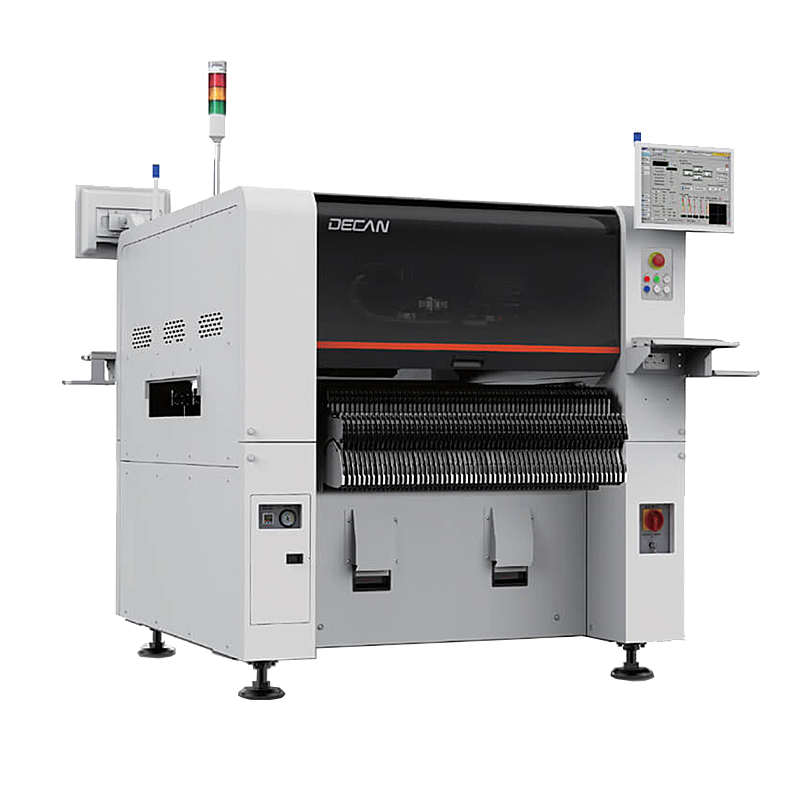
A useful reference point is the Hanwha Decan S2 SMT pick-and-place machine, which shows how those three families combine in one platform: an optimum speed of 92,000 CPH with the HS10 head, a 2-gantry by 10-spindle-per-head structure, placement accuracy of ±28 μm at Cpk ≥ 1.0 for 03015 chips and ±25 μm at Cpk ≥ 1.0 for ICs, a component range from 03015 to 12 mm with a height of 10 mm, and a standard PCB range of 50 × 40 mm to 510 × 460 mm.
Hanwha Precision Machinery is one of the recognised global SMT equipment vendors, alongside ASMPT Limited, Fuji Corporation, Yamaha Motor, Panasonic, and Juki Corporation. Other widely used modular platforms include the Fuji NXT series and Yamaha's YSM series, such as the YSM20R. For a turnkey buyer, these are reference points for comparison, not automatic recommendations, because the correct platform is the one that matches the line's product mix.
2. SMT Reflow Oven: Where the Solder Joint Is Actually Formed
The reflow oven heats the assembled board through a controlled thermal profile so that solder paste melts, wets the pads and leads, and then solidifies into a permanent joint. It is the station that converts placement into electrical connection.
Reflow performance is governed by zone architecture rather than by any single number:
- Heating zones: more zones allow a smoother, more precisely shaped ramp and soak.
- Cooling zones: controlled cooling determines grain structure and joint appearance.
- Heating zone length: longer zones give more time at temperature and more tolerance for heavy or high-mass boards.
- Atmosphere and exhaust: flux vapour must be extracted at a defined rate to keep the profile stable.
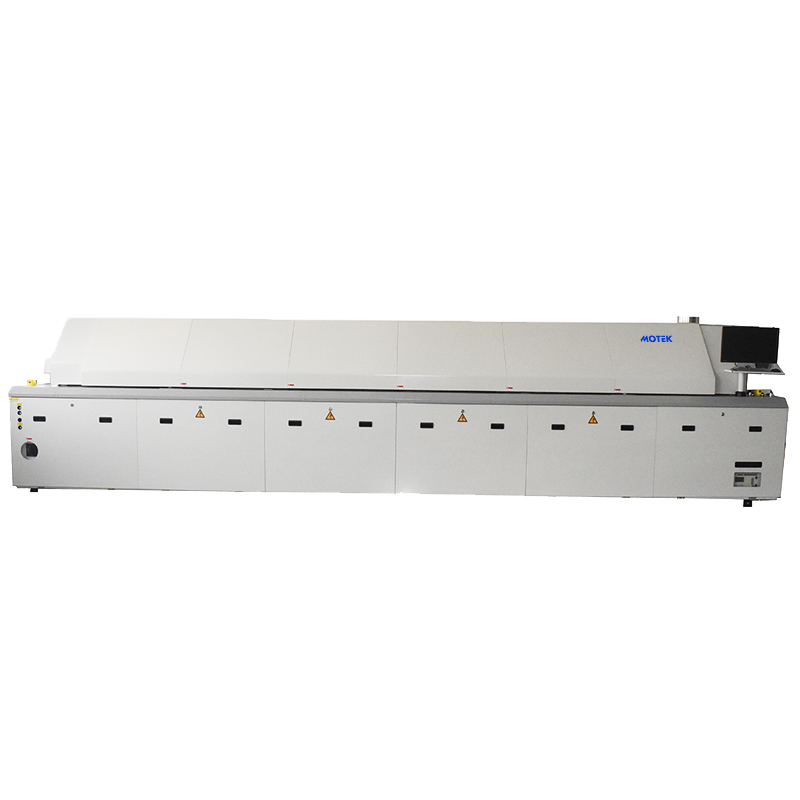
The XMR-800D SMT reflow oven illustrates a typical configuration for a mid-to-high throughput line: overall dimensions of 5,520 × 1,430 × 1,530 mm, an approximate weight of 2,710 kg, 8 top and 8 bottom heating zones with a 3,110 mm heating zone length, 3 top and 3 bottom cooling zones, a small-circulation rectifying plate structure, and an exhaust volume requirement of 11 m³/min × 2.
Two of those figures matter more to a buyer than they appear. The exhaust requirement of 11 m³/min × 2 is a site-planning constraint that must be designed into the factory before the oven is installed. The 2,710 kg weight affects floor loading and transport planning. Reflow is the component most likely to be under-specified during site preparation.
3. Automatic Online Glue Dispenser: The Station Most Buyers Forget
Not everything on a PCB is soldered. Adhesive dispensing, underfill, encapsulant, and protective coating are applied by the glue dispenser. In a genuinely turnkey line, the dispenser is placed inline, inside the conveyor flow, so dispensing happens at production speed instead of as an offline manual step.
The operational difference between an offline dispenser and an inline one is significant. An offline dispenser breaks the conveyor flow, adds handling, and introduces re-fixturing error. An inline dispenser inherits the line's conveyor height and transfer direction, so boards move through it like any other station.
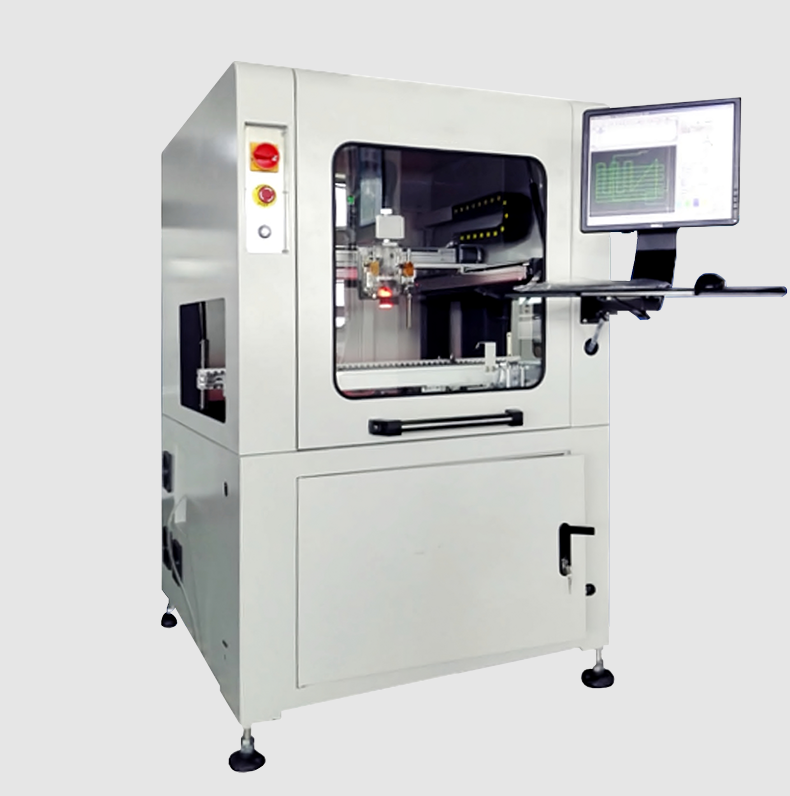
The HMH830D automatic online glue dispenser shows what that inline configuration looks like in specification terms: overall rack size of 1,060 × 1,200 × 1,700 mm, a T20 mm chrome-plated steel plate equipment platform, 650 kg weight, industrial computer plus motion control card control, computer-operated with manual teaching programming, storage for more than 1,000 running programs, a PCB transfer height of 920 ± 20 mm, transport speed of 0 to 5,000 mm/min, L to R (R to L) transfer direction, 2 stepper motors for transmission, and a supported PCB width range of 50 to 450 mm.
Two of these specifications are integration guarantees rather than features. The programmable transfer height of 920 ± 20 mm and the switchable L-to-R or R-to-L direction are what allow the dispenser to be dropped into an existing line layout without rebuilding the conveyor system around it.
Supporting Equipment That Makes the Line Genuinely Turnkey
The three anchors do not work alone. A turnkey SMT line adds material handling, process control, and quality verification around them. A typical configuration includes:
- Board handling: PCB loader, unloader, buffer conveyor, PCB turner, NG separator, splice machine
- Printing and dispensing: solder paste printer, automatic online glue dispenser
- Inspection: inline SPI for solder paste inspection, AOI for automatic optical inspection, X-ray inspection for BGA, and ICT
- Tooling and maintenance: SMT feeders in 8 mm, 12 mm, and 24 mm widths; SMT nozzles for Fuji, Yamaha, and JUKI platforms; stencil cleaning machine; PCBA cleaning machine; PCB depaneling router
- Environment and protection: environment monitor and ESD protection
These items are where "beyond equipment" becomes concrete. A turnkey provider that supplies the anchors but leaves feeder compatibility, nozzle selection, and conveyor matching to the buyer has not delivered an integrated line. It has delivered three machines and a problem.
Step-by-Step: How a Turnkey Line Runs from Loader to Unloader
The clearest way to understand integration is to follow a single board through the line.
- Loading. The PCB loader transfers bare boards onto the conveyor at the line's takt time.
- Solder paste printing. The solder paste printer deposits paste through a stencil onto the component pads.
- Paste inspection. Inline SPI checks paste volume, height, and alignment before any component is placed. This is the cheapest point in the process to catch a defect.
- Component placement. The pick-and-place machine picks components from feeders and places them at high speed and high accuracy.
- Adhesive dispensing. Where the product requires it, the automatic online glue dispenser applies adhesive, underfill, or coating within the same conveyor flow.
- Reflow. The reflow oven runs the board through a controlled heating and cooling profile that forms the solder joints.
- Optical inspection. AOI verifies placement and solder joint presence after reflow.
- Hidden-joint inspection. X-ray inspection verifies joints that AOI cannot see, such as BGAs.
- Electrical test and unloading. ICT or functional testing follows, then the unloader removes finished boards and the NG separator diverts rejected units.
Each step inherits the takt time and conveyor constraints of the others. That inheritance, not any individual machine, is what "turnkey" describes.
Comparison Table: The Three Core Machines at a Glance
| Component | Example model | Primary role in the line | Key verified parameters |
|---|---|---|---|
| SMT Pick-and-Place Machine | Hanwha Decan S2 | Places components onto solder-paste-printed pads | 92,000 CPH optimum (HS10 head); 2 gantry × 10 spindles per head; ±28 μm at Cpk ≥ 1.0 (03015 chip); ±25 μm at Cpk ≥ 1.0 (IC); parts 03015 to 12 mm, height 10 mm; PCB 50 × 40 to 510 × 460 mm |
| SMT Reflow Oven | XMR-800D | Forms permanent solder joints through a controlled thermal profile | 5,520 × 1,430 × 1,530 mm; approx. 2,710 kg; 8 top and 8 bottom heating zones; 3,110 mm heating zone length; 3 top and 3 bottom cooling zones; exhaust 11 m³/min × 2 |
| Automatic Online Glue Dispenser | HMH830D | Applies adhesive, underfill, or coating inline at production speed | 1,060 × 1,200 × 1,700 mm; 650 kg; industrial PC plus motion control card; manual teaching; more than 1,000 stored programs; transfer height 920 ± 20 mm; transport speed 0 to 5,000 mm/min; L to R (R to L); 2 stepper motors; PCB width 50 to 450 mm |
Parameters above are drawn from published equipment specifications. Site planning must additionally account for exhaust, power, floor loading, and cleanroom conditions.
Use Cases: Where Turnkey Lines Are Deployed
SMT turnkey lines are used across a wide range of electronics categories. Common deployment areas include automotive electronics, smart transportation, industrial automation, consumer electronics, medical technology, new energy systems, LED and optoelectronics, and telecommunications.
Representative project types include automotive electronics SMT lines, medical device PCB assembly, 5G communication equipment SMT, consumer electronics SMT lines, industrial control PCB production, LED display SMT assembly, and power supply module SMT lines.
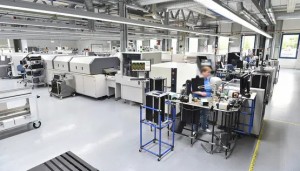
Environment matters as much as product. Typical operating conditions for these lines are indoor cleanroom environments, a narrow controlled temperature band around 23 °C ± 2 °C, controlled mid-low humidity of roughly 50% ± 10%, IP20 or IP40 protection, zero vibration, zero dust, and ESD-protected zones. Lines are commonly specified for 24/7 operation.
The end products tell the same story. In one documented SMT factory deployment across Germany, Israel, India, and Australia, covering 20 to 35 units of equipment over a five-year period, applications included smartphone motherboard assembly, tablet circuit board production, ECU control unit assembly, LED display modules, and LED streetlight drivers, with consumer electronics smartphone PCB assembly running at 50,000 units per month and mass production reaching 20,000 to 100,000 pieces per day. The stated highlight of that deployment was high density, high efficiency, and high reliability, three properties that only hold when the line is integrated rather than assembled.
Constraint Checks Before You Approve a Turnkey Line
Because this is a constraint-heavy purchase, four verification areas deserve specific attention.
Certification and compliance
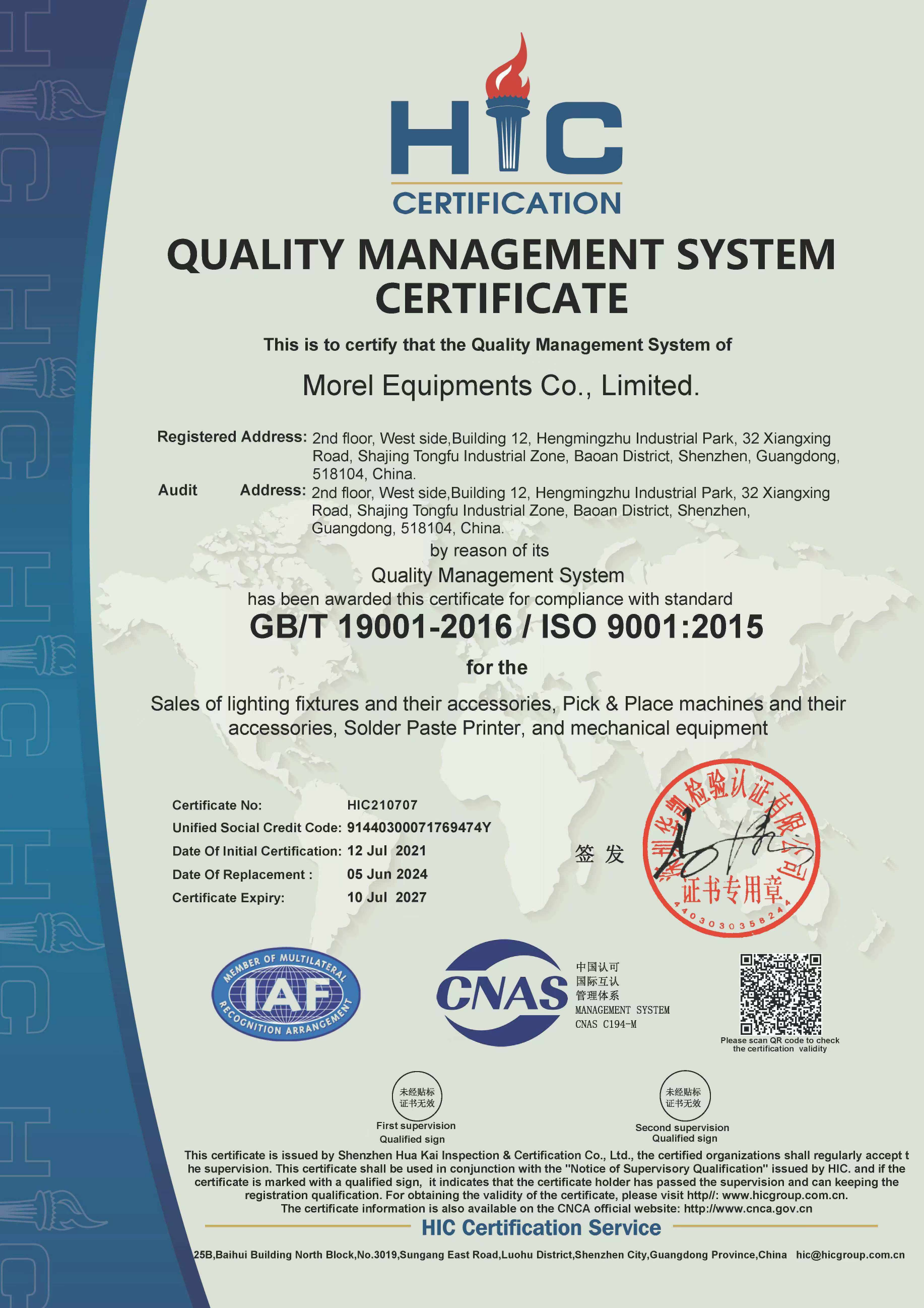
Ask for the certificates, not the claim. A compliant SMT equipment supplier should be able to present a quality management system certificate such as ISO 9001:2015 or GB/T 19001-2016, a machinery safety attestation such as a 2006/42/EC Machinery Directive Attestation of Conformity, and, for EU shipments, packaging compliance registration under the German Packaging Act (VerpackG). IPC-A-610J is the relevant global standard for judging the acceptability of the resulting assemblies.
Parameter compatibility
Match PCB width ranges, conveyor transfer heights, and transfer direction across every station. The glue dispenser's 50 to 450 mm PCB width range and 920 ± 20 mm transfer height, for example, must be compatible with the mounter's 50 × 40 to 510 × 460 mm range and the oven's board handling capability.
Site and utility constraints
Reflow exhaust volume, floor loading for heavy equipment, and cleanroom classification are fixed constraints. They must be resolved before installation, not after.
Service and training scope
Confirm what happens after commissioning: remote technical support, 24/7 online service, and whether engineers travel to the supplier's facility for training, typically about one week, or whether remote and on-site training options are arranged instead.
Frequently Asked Questions
What certifications should a compliant SMT turnkey solution provider hold?
At minimum, a supplier should be able to show a quality management system certificate and a machinery safety attestation for the equipment supplied. Motek holds an ISO 9001:2015 or GB/T 19001-2016 Quality Management System Certificate, certificate number HIC210707, issued by Shenzhen Hua Kai Inspection & Certification Co., Ltd., valid to 2027-07-10, covering the sales of lighting fixtures and accessories, pick-and-place machines and accessories, solder paste printers, and mechanical equipment. A 2006/42/EC Machinery Directive Attestation of Conformity, certificate number M.2023.206.C91284, issued by UDEM International Certification Auditing Training Centre, valid to 2028-10-10, covers the ICT handler scope. A German Packaging Act registration under VerpackG, certificate number DE2364478064729, registered with Stiftung Zentrale Stelle Verpackungsregister, supports EU shipments. Separately, IPC-A-610J defines the Class 1, 2, and 3 acceptability levels used to judge the assemblies the line produces.
What equipment is included in a complete SMT turnkey line?
A complete line combines three core process anchors, a pick-and-place machine, a reflow oven, and an automatic online glue dispenser, with the stations that connect and verify them. Typical matched equipment includes the PCB loader, solder paste printer, SPI, pick-and-place machine, reflow oven, unloader, AOI, X-ray inspection, ICT, splice machine, PCB turner, NG separator, stencil cleaner, environment monitor, and ESD protection. Tooling and consumables such as SMT feeders in 8 mm, 12 mm, and 24 mm widths, and SMT nozzles compatible with Fuji, Yamaha, and JUKI platforms, belong to the same scope.
What drives the budget of an SMT turnkey solution?
Budget is driven by configuration rather than by a single price. The main variables are the number of process stations in the line, the placement speed and platform class of the pick-and-place machine, the number of heating and cooling zones required in the reflow oven, whether inline dispensing and inline inspection are included, the quantity of feeders and nozzles, and the depth of customisation requested. Customisation options include voltage, logo, label, packaging, colour, size, graphics, and material changes, as well as production line layout design and remote or on-site training plans. Because these choices change the line's structure, an accurate quotation should follow a defined product mix and board envelope rather than a generic equipment list.
Can we validate an SMT solution before committing to a full line?
Yes. Turnkey sourcing normally allows validation before full commitment. Motek operates with a minimum order quantity of one unit, which allows a buyer to evaluate a single station or a partial configuration first. Quality control is based on 100% pre-shipment testing, and customisation can be applied at the equipment level, including voltage, logo, and personalisation of the service plan. For buyers who need closer contact with the process, remote and on-site training options are available alongside the production line layout design service.
What is the typical lead time, and how is ongoing support handled?
Motek states a lead time range of 7 to 45 days, which varies with configuration complexity and customisation requirements. After-sales support includes remote technical support and 24/7 online service. Alternatively, a client's engineers can travel to China for approximately one week of training. Export experience covers the EU, the US, the Middle East, and Southeast Asia. To move from research to a concrete configuration, the fastest next step is to request the SMT equipment catalogue and a line proposal matched to your board sizes, product mix, and target output.
Next Step: Turn Your Line Specification into a Quotation
If you are moving from research into evaluation, the most useful inputs are your target board sizes, expected product mix, and required output per shift. Send those three points and we will map them against a turnkey configuration built around the pick-and-place machine, reflow oven, and inline glue dispenser.
Download the SMT equipment catalogue (PDF)
sales@morequip.com | www.morequip.com | WhatsApp: +86 199 2455 0176
Conclusion
An SMT turnkey solution works because three process anchors and their supporting stations are specified against one line plan. The pick-and-place machine sets the throughput and accuracy ceiling, the reflow oven determines joint formation and imposes fixed site constraints such as exhaust and floor loading, and the automatic online glue dispenser adds the processes that soldering alone cannot perform. All three share a common conveyor height, transfer direction, and takt time.
For a buyer in the research-to-evaluation stage, the practical checklist is short. Verify certifications as documents. Compare PCB width ranges, transfer heights, and transfer direction across every station. Confirm that reflow exhaust and floor loading fit your building. And confirm what the supplier owns after delivery, including commissioning, training, and support. Those four checks separate a genuinely integrated turnkey line from a collection of machines that happens to ship together.
Have Questions or Need More Details?
Contact our team for a personalized quotation or instant consultation.
Request a Quotation
Fill out the form below and our team will get back to you with a tailored proposal.
WhatsApp Direct Chat
Prefer to chat in real-time? Message us on WhatsApp for instant assistance & quick answers.
- Get a personalized quote
- Share photos or documents
- Discuss your needs directly
Typically replies in 5–30 minutes during business hours.