
Top 5 SMT Turnkey Components to Prioritize in 2026: A Line Builder’s Shortlist
Motek · SMT Turnkey Solution · 2026 Line-Building Memo
High-mix SMT lines are usually specified in the wrong order. The buyer starts with a budget total, then negotiates station by station — which means the sequencing decision, the one that determines whether the line can actually absorb the product mix, gets made by default rather than by design.
This memo is a shortlist rather than a catalogue. It ranks five machine categories in the order a line builder should fund and specify them for a high-mix SMT line in 2026, states why each position sits where it does, and lists the criteria that decide whether a specific unit belongs in the line at all.
The order is led by the pick and place machine, because placement accuracy is the one variable no later station can repair. The SMT reflow oven follows, because thermal profiling stability decides whether that placement accuracy survives the oven. Third is the automatic online glue dispenser, which brings precision adhesive application into the conveyor flow instead of leaving it as an offline step. Ranks four and five are supporting stations — PCBA cleaning and PCB depaneling — which protect yield once the primary three are correct.
The detailed selection reasoning below is grounded in those three core machine categories and evaluated on throughput versatility, floor-space efficiency, and long-term support. Market figures, standards, and line-configuration facts in this memo are drawn from published market research, the IPC standards set, and Motek’s own supplier documentation.
Problem Definition: Priority Order Is a Capital Decision, Not a Preference
In a high-mix environment, the binding constraint is rarely peak speed. It is the number of changeovers the line can absorb per shift without losing placement accuracy or thermal control. Three stations carry most of that burden, and two more protect what the first three produce.
Getting the order wrong is expensive in a way that price negotiation cannot repair. A line specified around the oven still fails if the mounter cannot hold position across a mix that changes daily, because the oven cannot re-center a component that was never placed correctly. The reverse case is far more forgiving: a line specified around placement first can absorb a later oven upgrade, because the placement decision fixes the conveyor, the feeder architecture, and the footprint that every downstream station has to fit into.
There is also a second-purchase dimension. A line builder who buys once buys a machine; a line builder who plans a second line buys an ecosystem — spare parts, technical response, training, and delivery reliability. That long-term layer is why ranks four and five stay on this shortlist even though they rank last: they are the stations most often deferred, and the ones most awkward to retrofit after the conveyor layout is fixed.
Industry Background: Where the 2026 Market Puts the Weight
The global SMT equipment market was valued at approximately USD 6.6 billion in 2025 and is projected to reach USD 14.6 billion by 2036, according to Transparency Market Research. Asia-Pacific held a 54% revenue share of that market in 2025, ahead of North America and Europe.
Within the market, placement equipment is the largest single segment. Pick and place machines account for approximately 38% to 48% of total SMT equipment market value (Persistence Market Research / Cognitive Market Research). That share is the first quantitative argument for ranking the mounter first: it is both the largest spend category and the station where accuracy is created.
The demand side reinforces the same order. The high-mix / low-volume assembly segment is projected to grow at a CAGR of 8.31% through 2031, driven by demand for customized industrial and medical electronics (Mordor Intelligence). More high-mix volume means more changeovers per shift, which shifts the value of a machine away from peak placement rate and toward throughput versatility and repeatable setup.
The platform landscape is stable and well documented. Key global SMT equipment vendors include ASMPT Limited, Fuji Corporation, Yamaha Motor, Panasonic, Juki Corporation, and Hanwha Precision Machinery (MarketsandMarkets). Fuji Corporation’s NXT platform and Yamaha’s YSM series — for example, the YSM20R — are industry-standard modular mounters for high-speed and high-precision placement (Fuji / Yamaha official product catalogs). For a line builder this has a practical consequence: turnkey integration has to be platform-aware, because the mounter choice fixes the feeder and nozzle ecosystem the rest of the line is built around.
On the compliance side, IPC-A-610J, released in March 2024, is the current global standard for the acceptability of electronic assemblies, and it defines Class 1, Class 2, and Class 3 quality levels (IPC International). The class a line is specified to is not a formality — it sets how much placement and thermal margin the line has to hold, and therefore how the budget should be prioritized.
The 2026 Shortlist at a Glance
| Rank | Component | Primary function in a high-mix line | Why it ranks here |
|---|---|---|---|
| 1 | Pick and place machine | Component placement at the accuracy the product requires | Largest equipment segment at approximately 38%–48% of SMT equipment market value; placement accuracy cannot be corrected downstream |
| 2 | SMT reflow oven | Joint formation under a controlled, repeatable thermal profile | Converts placement accuracy into a reliable joint; profile stability decides yield on the products already placed |
| 3 | Automatic online glue dispenser | Inline adhesive dispensing for mixed-technology assemblies | Removes an offline step from the conveyor flow and applies adhesive with machine repeatability instead of manual variance |
| 4 | Cleaning machine (PCBA cleaning) | Residue control after soldering | Protects reliability where cleanliness is part of the reliability requirement |
| 5 | PCB cutting machine (depaneling) | Board separation after assembly | Last mechanical stress point on the board; difficult to detect before it becomes a defect |
Rank 1 — Pick and Place Machine: Where Placement Accuracy Is Decided
Placement accuracy is the only line variable with no downstream correction. A component placed outside its land pattern will not be re-centered by the oven, and no amount of thermal tuning recovers the joint. That is why the pick and place machine takes the top position on this shortlist, and why the market data — approximately 38% to 48% of total SMT equipment value — matches the operational logic rather than merely coinciding with it.
For a high-mix line, the specification question is not “how fast” but “how many different products can this platform place accurately without a long setup”. Throughput versatility therefore leads the criteria list: feeder positions and feeder widths, with 8 mm, 12 mm, and 24 mm tape configurations being the common widths to confirm; nozzle availability and replacement supply; and the documented changeover procedure between products.
Platform fit is the second criterion, and it is a decision with a longer life than the 2026 budget cycle. The Fuji NXT platform and the Yamaha YSM series, including the YSM20R, are established modular mounters for high-speed and high-precision placement, and Juki Corporation is likewise listed among the key global SMT equipment vendors. Whichever platform a line standardizes on, the supply of feeders, nozzles, and spares follows the platform rather than the integrator who sold the line. Line builders should confirm nozzle and feeder continuity for the exact platform before signing, not after installation.
Floor-space efficiency is the third criterion, and it is where high-mix lines diverge from volume lines. A configuration that carries more feeder positions and more changeover points per square meter is usually the better fit than one that carries more peak placement rate per square meter, because the second configuration is priced for output that a mixed order book may not sustain.
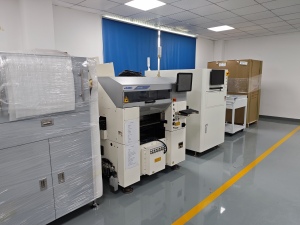
Motek’s product lines include pick-and-place machines alongside reflow soldering, cleaning machines, and PCB cutting machines. For the sequencing decision this matters in one specific way: when the mounter is specified with an integrator that also supplies the thermal and downstream stations, the interface questions between stations are settled inside one technical parameter set instead of across several vendors.
Rank 2 — SMT Reflow Oven: Thermal Profiling Stability
The reflow oven is where placement accuracy becomes a joint. Its specification axis is not headline throughput but thermal profiling stability — the ability to reproduce the same profile board after board, product after product, when the mix changes daily. An oven that holds its profile across a mixed order book protects the accuracy paid for at Rank 1. An oven that drifts converts it into latent defects that surface in the field.
Motek’s recorded comparison against wave reflow soldering gives the ownership picture in concrete terms:
| Comparison dimension | Reflow soldering vs. wave reflow soldering (Motek comparison data) |
|---|---|
| Machine warranty | 2-year difference recorded |
| Cost | 10% lower |
| Maintenance | Less maintenance |
| Efficiency | Higher efficiency; long-term stable production; lower maintenance cost |
| Recorded as suited to | SMT industrial plants |
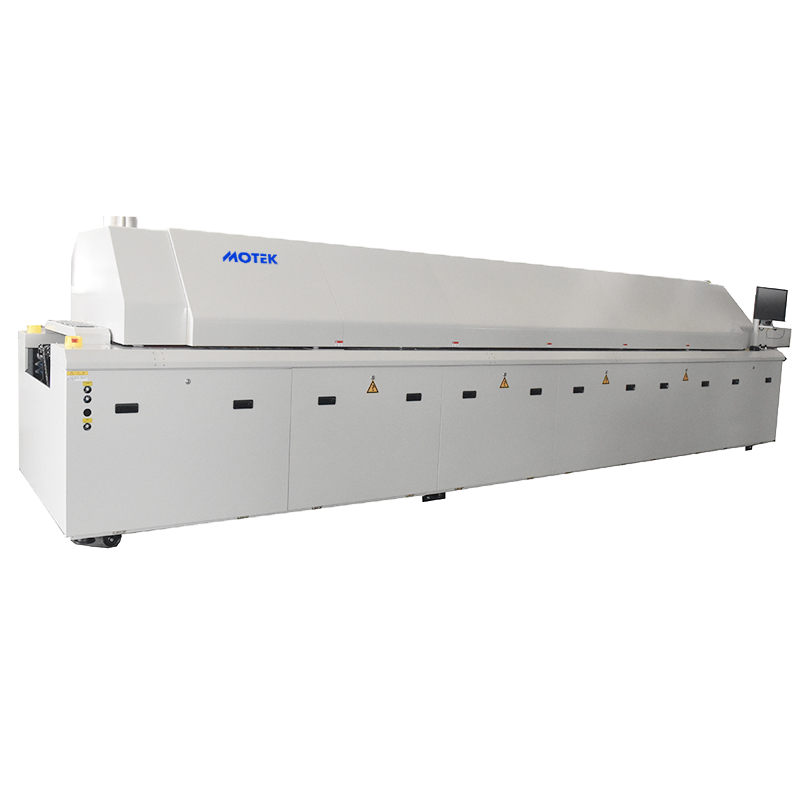
For a high-mix line, the practical criteria on the oven are profile repeatability across the widest product range in the order book, the maintenance interval and the cost of consumables, and the floor space the oven consumes relative to the conveyor layout. Lead-free processing is a baseline requirement in most 2026 specifications rather than an upgrade path.
Sequencing note: the oven is ranked second rather than first because its performance ceiling is set by the mounter’s accuracy, while the mounter’s accuracy is not set by the oven. If only one station can be funded in the first phase, the mounter is the allocation; the oven follows in the same specification cycle.
Rank 3 — Automatic Online Glue Dispenser: Precision Adhesive Application
The automatic online glue dispenser earns third place because it removes a step that would otherwise sit outside the conveyor. Adhesive dispensing is required for mixed-technology assemblies — boards that combine reflow-soldered surface-mount parts with parts that must be bonded, or that have to be held in position through a subsequent soldering step. Handled offline, that operation introduces manual variance and a queue between two machine-driven stations. Handled inline, it becomes part of the same production flow as placement.
The specification axis here is precision rather than speed: repeatable dot placement, consistent adhesive volume, and stable positioning relative to the board. The second axis is integration — the dispenser has to sit in the conveyor flow at the correct point relative to the mounter and the oven, which is why floor-space efficiency and conveyor layout should be decided together with the mounter rather than after it.
Rank position matters here in a specific way. A high-mix order book typically contains a subset of products that need adhesive, not all of them. That is why the dispenser sits third rather than first: it is essential for the products that need it and idle for those that do not. Line builders should size it against the share of the mix that requires adhesive, not against the full capacity of the line.
Ranks 4 and 5 — The Supporting Stations: Cleaning and Depaneling
Rank 4 — Cleaning Machine (PCBA Cleaning)
Post-soldering residue control is the first supporting station. Where cleanliness is part of the reliability requirement, it decides whether a board that passed functional test still meets expectations later. Motek’s product lines list a cleaning machine alongside reflow soldering, pick-and-place machines, and PCB cutting machines, which means the station can be specified inside the same integration cycle rather than sourced separately. The criterion is method fit: the cleaning approach has to match residue type, component sensitivity, and line throughput. Companion capability such as stencil cleaning belongs in the same quality discussion, because paste-transfer quality and board cleanliness are both residue-management decisions.
Rank 5 — PCB Cutting Machine (Depaneling)
Board separation is the last mechanical step and the last chance to damage an otherwise good assembly. Depaneling ranks fifth because it does not influence placement or thermal control — but it stays on the list rather than being dropped, because uncontrolled separation stress is difficult to detect before it appears as a cracked joint or a stressed component. Motek’s product lines include a PCB cutting machine, so the station can be integrated in the same turnkey cycle. The specification criterion is fit to the board: panel format, board thickness range, and the separation method appropriate to the component density near the break line.
Step-by-Step Breakdown: How to Sequence the Shortlist
- Fix the mix profile first. List the product families the line must run in its first two years and the changeovers per shift each one implies. The mix profile, not the budget total, determines whether throughput versatility or peak rate is the correct specification axis.
- Rank stations by yield leverage, not by price. Placement first, because accuracy cannot be corrected downstream (Rank 1). Thermal second, because the oven decides whether that accuracy survives (Rank 2). Adhesive third, because it removes an offline step for the share of the mix that needs it (Rank 3).
- Fix the platform before the price. Choose the mounter platform — Fuji NXT, Yamaha YSM, JUKI, or equivalent — then confirm feeder width coverage (8 mm, 12 mm, 24 mm), nozzle supply, and replacement-part continuity for that platform.
- Decide floor space and conveyor layout once. Throughput versatility and floor-space efficiency are linked: feeder positions, buffer points, and the inline dispenser position all consume the same footprint. Deciding them together prevents a layout change after the machines are ordered.
- Name the acceptance class. Write the IPC-A-610J class — Class 1, Class 2, or Class 3 — into the purchase specification, and confirm CE certification for the equipment supplied.
- Confirm the interface points between stations. Detailed technical parameter confirmation before shipment is the step that prevents two individually correct machines from arriving incompatible.
- Lock the long-term layer. Agree spare-part categories, support response (24/7 technical support, fast repairs, spare parts supply), the training scope, and the customer communication routine before the first station ships.
- Set the commercial terms. Motek’s published purchasing terms allow MOQ 1 unit, delivery terms of FOB, CIF, EXW, FCA, DDP, or DAF, acceptance by pre-shipment test, and payment at 30% T/T in advance with 70% T/T against copy of B/L (or 50% T/T in advance and 50% T/T against copy of B/L).
Use Cases: Where This Priority Order Pays Off
High-Mix / Low-Volume EMS Factory
Growth in this segment is projected at a CAGR of 8.31% through 2031, driven by customized industrial and medical electronics. The line changes over more often than a volume line, so placement versatility (Rank 1) and profile repeatability (Rank 2) carry more weight than peak rate, while the inline dispenser (Rank 3) removes a manual operation from the products that need adhesive.
Industrial and Medical Electronics Programs
Programs in these segments are usually specified to a higher IPC-A-610J class, which raises the margin the line has to hold and increases the relative value of thermal control (Rank 2) and residue control (Rank 4) against their purchase price.
Export-Oriented Line Builds
Motek’s export profile is 100% export, with main markets in the EU, USA, Australia, Canada, and ASEAN. For line builders in those markets, delivery-layer controls matter as much as the machines: advance inventory and delivery confirmation, professional packaging with logistics tracking, and customs broker assistance are the documented measures that keep an installation schedule intact.
Comparison Table: The Three Core Components by Selection Criterion
| Criterion | Pick and place machine | SMT reflow oven | Automatic online glue dispenser |
|---|---|---|---|
| Primary process role | Creates placement accuracy | Converts placement into a soldered joint under a stable profile | Applies adhesive inline for mixed-technology assemblies |
| Weight in cited market research | Largest segment, approximately 38%–48% of total SMT equipment market value | Not separately quantified in the cited sources | Not separately quantified in the cited sources |
| Throughput versatility priority | High — feeder widths (8 mm, 12 mm, 24 mm), changeover procedure, number of feeder positions | High — profile repeatability across the widest product range in the mix | Scoped to the share of the mix that requires adhesive |
| Floor-space efficiency priority | High — feeder positions and changeover points per square meter | Medium — oven footprint relative to conveyor layout | Medium — inline position relative to mounter and oven |
| Long-term support dependency | Nozzle and feeder continuity for the chosen platform (Fuji, Yamaha, JUKI) | Maintenance interval, consumable cost, spare-part supply | Consumable supply and technical response time |
| Recorded commercial note | — | 2-year machine warranty difference and 10% lower cost versus wave reflow soldering; less maintenance; higher efficiency; long-term stable production; recorded as suited to SMT industrial plants | — |
| Acceptance standard | IPC-A-610J class as named in the purchase order | Same | Same |
Long-Term Ownership: The Ecosystem Checks That Decide the Second Purchase
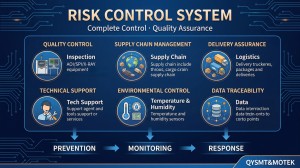
A ranking memo about a first line is, in practice, also a decision about a second line. At that point the deciding factor is no longer the machine specification but the support layer around it — and that layer can be checked in writing before the first purchase. Motek’s documented risk control framework sorts the exposure into three types: supply chain risk, delivery risk, and technical risk.
| Risk type | Where it appears during a turnkey build | Documented control method |
|---|---|---|
| Supply chain risk | Longer-than-planned component or spare-part lead times | Advance inventory and delivery confirmation; strict quality inspection process; scratch code management |
| Delivery risk | Damage, customs delay, or schedule slip on a station already placed on the floor plan | Professional packaging with logistics tracking; customs broker assistance; advance delivery confirmation |
| Technical risk | Machines that are individually correct but incompatible at the interface | Detailed technical parameter confirmation before shipment; pre-shipment test as the acceptance criterion |
Around those controls, the documented enterprise measures are a comprehensive training system, strict quality inspection before shipment with prompt resolution and customer communication for any issue found, 24/7 technical support with fast repairs and spare parts supply, and a standing customer communication mechanism. For a line builder, that list is the practical definition of an ecosystem: trained operators, available spares, and a defined response path.
FAQ: Compliance, Capability, Budget, Sample, and Lead Time
Which acceptance standard should be written into a high-mix SMT line specification?
IPC-A-610J, released in March 2024, is the current global standard for the acceptability of electronic assemblies, and it defines Class 1, Class 2, and Class 3 quality levels (IPC International). The class chosen sets the placement and thermal margin the line must hold, so it belongs in the purchase specification rather than in a general quality statement. On the equipment side, Motek holds multiple CE certifications and applies pre-shipment test as the acceptance criterion for orders.
Can one supplier integrate the pick and place machine, the reflow oven, and the glue dispenser as a single line?
Motek’s product lines include reflow soldering, pick-and-place machines, cleaning machines, and PCB cutting machines, which means the primary stations and the two supporting stations can be specified inside one integration cycle. Integration is supported by detailed technical parameter confirmation before shipment, a comprehensive training system, and 24/7 technical support with fast repairs and spare parts supply.
If the budget only covers one station this year, which should it be?
The pick and place machine. Placement equipment is the largest segment of the SMT equipment market at approximately 38% to 48% of total equipment value, and its output — placement accuracy — cannot be corrected by any later station. The reflow oven is the natural second allocation in the same cycle: Motek’s recorded comparison data lists reflow soldering against wave reflow soldering at 10% lower cost with less maintenance, higher efficiency and long-term stable production, and records it as suited to SMT industrial plants.
Can a line be validated before committing to full production volume?
Motek’s purchasing terms set a minimum order quantity of 1 unit and name pre-shipment test as the acceptance criterion, so a first order can be a single unit rather than a full line. That is the practical way to validate placement accuracy, thermal profile repeatability, and adhesive placement against the actual product mix before scaling the specification to the remaining stations.
What delivery terms and long-term support apply after the first station ships?
Motek’s purchasing terms list delivery terms of FOB, CIF, EXW, FCA, DDP, and DAF, with payment at 30% T/T in advance and 70% T/T against copy of B/L, or 50% T/T in advance and 50% T/T against copy of B/L. After shipment, the documented support measures are 24/7 technical support, fast repairs, spare parts supply, and a customer communication mechanism, while delivery risk is managed through advance inventory and delivery confirmation, professional packaging with logistics tracking, and customs broker assistance. To move from shortlist to specification, request a quote for the first station and download the full SMT equipment catalogue below.
Conclusion: Sequence the Three, Then Add the Two
For a high-mix SMT line in 2026, the shortlist order is the pick and place machine, the SMT reflow oven, and the automatic online glue dispenser — followed by the cleaning machine and the PCB cutting machine as supporting stations. The order follows one rule: each station is ranked by whether a later station can compensate for it. Nothing compensates for placement accuracy, the oven decides whether that accuracy survives, the inline dispenser removes an offline step for part of the mix, and cleaning and depaneling protect the result.
The market data supports the same sequence. Placement is the largest equipment segment at approximately 38% to 48% of SMT equipment value, high-mix low-volume assembly is growing at a CAGR of 8.31% through 2031, and the IPC-A-610J class named in the purchase order sets the margin the whole line has to hold.
The second half of the decision is not technical. It is whether the supplier can carry the line through its production life — spares, nozzle and feeder continuity for the chosen platform, technical response, and delivery discipline. That layer is worth verifying before the first station ships, because it is the layer that decides where the second line is ordered from.
Next Step: Specify the First Station, Then the Rest
Review the full SMT equipment catalogue and request a single-unit validation order or a station-level quote. Motek’s purchasing terms allow MOQ 1 unit, pre-shipment test as the acceptance criterion, and delivery terms of FOB, CIF, EXW, FCA, DDP, or DAF.
Catalogue (PDF): Download the Motek SMT equipment catalogue
Website: www.morequip.com
Email: sales@morequip.com · Tel: +86-755-21635007 · WhatsApp: +86 199 2455 0176
Motek — Morel Equipments Co., Ltd., Shenzhen, Guangdong, China.
Have Questions or Need More Details?
Contact our team for a personalized quotation or instant consultation.
Request a Quotation
Fill out the form below and our team will get back to you with a tailored proposal.
WhatsApp Direct Chat
Prefer to chat in real-time? Message us on WhatsApp for instant assistance & quick answers.
- Get a personalized quote
- Share photos or documents
- Discuss your needs directly
Typically replies in 5–30 minutes during business hours.