
SMT Turnkey Partnership FAQ: Warranty, Customization & QC Questions
SMT Turnkey Partnership FAQ: Warranty, Customization & QC Questions
A long-term SMT turnkey partnership rests on four commitments you should be able to read before the first purchase order is signed: a warranty with a date you can verify, a quality-control process you can audit, conformity documents that match your exact line configuration, and a customization route with a defined approval step. Machine specifications win the first order. These four commitments decide whether the relationship still works in year two.
This article is written for buyers at the decision and execution stage, where a shortlist exists and the remaining task is to turn a supplier's answers into contract language. Motek (Morel Equipments Co., Ltd.), a Shenzhen-based SMT turnkey supplier established in 2011, is used throughout as a worked example of how published supplier terms can be read, tested and questioned. Where a term is documented, it is stated as documented. Where a supplier's material leaves a detail open, that gap is treated as a question to settle rather than filled in with an assumption.
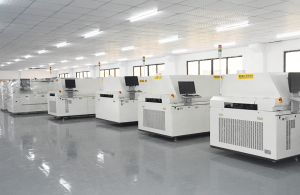
A turnkey SMT line is bought once and supported for years — the support terms deserve the same scrutiny as the equipment list.
Why a Turnkey Relationship Outlives the Purchase Order
A turnkey package is a single capital decision followed by a long operational one. On acceptance day the discussion is about placement speed, reflow profiles and inspection coverage. From month two onward the discussion is different: a feeder that has worn out, a nozzle that needs replacing on a Fuji, Yamaha or JUKI head, a board revision that changes the stencil, a customer who wants new packaging and labeling, or a repeat order that has to be scheduled against an existing production plan. None of those sit inside the equipment specification sheet.
That is why the long-term, ecosystem-level question matters more than the technical comparison. A supplier that can document how it handles warranty claims, inspection evidence, conformity paperwork and post-order customization converts a one-off equipment purchase into a support relationship. A supplier that answers those points only verbally leaves the buyer carrying the risk.
For an EMS factory running high-mix work, the exposure is amplified. Lines are reconfigured, products change, packaging changes, and the engineering team needs answers quickly. Every unanswered question in the original agreement becomes a negotiation later, usually at the worst possible moment.
Where SMT Turnkey Support Conversations Usually Slip
Market context explains why buyers are asking harder service questions now. Research and Markets reported the global SMT equipment market at approximately USD 4.3 billion in 2024, based on a forecast covering 2024–2030 (GlobeNewswire, October 2026). Within that total, the same source estimated inspection equipment as the fastest-growing category, at roughly 15.2% CAGR through 2033, driven by AI-assisted 3D AOI and SPI. The practical reading for a buyer is straightforward: quality evidence is moving upstream in the buying conversation, and the supplier who can supply that evidence in a usable form is easier to keep.
The friction points themselves are remarkably consistent across turnkey negotiations:
- The warranty clock. Twelve months sounds unambiguous until someone asks whether it starts at shipment, at delivery, or at acceptance.
- Who actually inspects. A supplier's own QA/QC inspector, a pre-shipment test signed by the supplier, and an independent third-party inspection are three different levels of assurance.
- What CE covers. A certificate for a machine family is not automatically a certificate for the exact configuration on your order.
- Customization after the PO. Label, packaging, color, size, logo or graphic design changes made late can move cost and schedule.
- Spares and consumables. Nobody lists 8 mm, 12 mm and 24 mm feeders, nozzles and belts in the excitement of the equipment comparison.
The Four Blocks to Settle Before You Commit
A partnership conversation is easier to run when it is split into four blocks, each with its own evidence requirement. The blocks below follow the order in which they usually become urgent: warranty first, because it is the first thing tested; quality control second, because it generates the evidence; conformity third, because it gates customs and customer acceptance; customization fourth, because it is where the relationship is renewed.
Block 1 — Warranty: What a 12-Month Term Should Actually Cover
Motek states a 12-month warranty on all products. That is a clear starting position, and it is the kind of statement a buyer should convert into four specific confirmations.
- Start date. Ask for the warranty period to be anchored to a date you control, such as acceptance after the pre-shipment test, rather than an unqualified reference to the invoice.
- Parts and labour split. A 12-month warranty that covers parts but not the labour to fit them produces a different cost outcome from one that covers both.
- Consumables. Nozzles, feeders, belts, filters and similar wear items are normally outside a warranty, but the exclusion list should be written down so there is no debate later.
- Route and speed. Motek's stated support model includes 24/7 technical support, fast repairs and spare parts supply; ask what the response path looks like for your time zone and who your named contact is.
One question is worth asking even though it feels premature: what happens in month 13? A supplier that has a documented spare parts supply arrangement and a training system in place is describing continuity; a supplier that has only a warranty period is describing a deadline.
Block 2 — Quality Control: Who Inspects, When, and Against What Record
Motek's published support material places QA/QC inspectors inside the quality process and names pre-shipment test as the acceptance criterion, supported by a strict quality inspection process before shipment. For a buyer, the useful follow-up is not "do you inspect?" but "what document do I receive, and who signs it?"
Five confirmations turn this block from a promise into evidence:
- The inspection record or test report format you will receive with the shipment.
- The sampling basis used for a line-level order, and whether the test is full or sample based.
- Who signs acceptance on the supplier side, and who signs on yours.
- Whether you may send your own inspector or appoint an independent agency to witness the pre-shipment test.
- How defects found during inspection are recorded, communicated and resolved before dispatch.
Motek's stated control methods also include scratch code management and detailed technical parameter confirmation. Both are quietly valuable in a long-term relationship: traceability codes let a fault on a delivered unit be traced back to a build batch, and a confirmed parameter sheet prevents the slow drift that happens when "the same as last time" is assumed rather than verified.
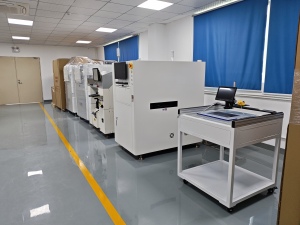
Inspection records, not inspection promises, are what support a warranty claim two years later.
Block 3 — CE Certifications: Scope, Documents and Their Limits
Motek holds multiple CE certifications, and that is the correct point at which to ask a scope question rather than a yes/no question. CE marking operates per product and per applicable directive, so the meaningful discussion is which models, options and configurations each document covers — not simply whether the supplier is "CE certified".
Ask for the declaration of conformity that corresponds to your order, and check three things on it: the product description matches the model you are buying, the configuration on the document matches your order, and you understand which party holds the declaration. If your configuration includes an option not listed on the document, ask what additional documentation will be issued. This is also the moment to confirm what conformity evidence your own customers will require, because that requirement flows straight back to your supplier.
Motek reports ISO 9001:2015 certification in its published supplier material. As with any supplier-side statement, the certificate's scope should be requested directly rather than inferred from a logo, and the same discipline applies to every conformity document in the package.
Block 4 — Customization: Material Replacement, Label, Packaging, Color, Size, Logo and Graphic Design
Motek offers customization covering material replacement, label, packaging, color, size, logo and graphic design. These options are supported by an in-house process that includes laser cutting, bending, assembling and debugging, which is relevant because size and material changes are fabrication decisions, not artwork decisions.
The partnership question is about control of change, not the existence of options. Before committing, agree:
- The approval loop. Who approves drawings, artwork and label proofs, and in what format.
- Revision control. How a revised logo or packaging specification is versioned so that order three does not silently revert to order one's artwork.
- The interaction with commercial terms. Standard orders carry a minimum order quantity of 1 unit; confirm in writing whether a specific customization changes that minimum or the delivery schedule.
- The interaction with warranty and spares. If a material is replaced, confirm which spare parts specification still applies.
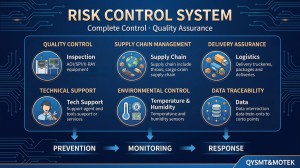
Customization is a change-control process: the deliverable is an approved drawing, not a verbal agreement.
Seven Steps to Run the Due-Diligence Conversation
The four blocks become manageable when they are run as a sequence rather than a single meeting. The steps below are ordered so that each one produces a document the next step depends on.
- Fix the support scope in writing. Warranty length, start date, parts and labour split, exclusions, named contact and response route. For Motek, the anchor is the stated 12-month warranty on all products plus 24/7 technical support, fast repairs and spare parts supply.
- Request the inspection and acceptance plan. Confirm the pre-shipment test as the acceptance criterion, the report format, and whether third-party witnessing is permitted.
- Verify conformity documents against your exact configuration. Match model, options and directive coverage on the declaration; do not accept a family-level certificate as configuration-level proof.
- Define the customization change route. Drawing approval, artwork versioning, and the written confirmation that customization does not disturb the agreed schedule.
- Build the consumables and spares list. Feeders in 8 mm, 12 mm and 24 mm formats, nozzles matched to Fuji, Yamaha or JUKI heads, belts, filters and cleaning consumables — with the supply route and expected replenishment interval for each.
- Confirm the commercial terms that govern repeat orders. Minimum order quantity of 1 unit, delivery terms FOB, CIF, EXW, FCA, DDP or DAF, and payment terms of 30% T/T in advance with 70% against copy of B/L, or 50%/50%.
- Agree the review rhythm. A short scheduled review of quality issues, spare parts consumption and change requests keeps a support relationship from becoming a series of emergencies.
Three Situations Where the Answers Change the Decision
The relative weight of each block shifts with the buyer's situation. The three conditional examples below show how.
Scenario A — A High-Mix EMS Factory Reconfiguring Lines Frequently
Here the customization block and the spares block carry the most weight. Frequent changeovers consume feeders and nozzles, and product-specific stencils and programs change often. A supplier whose change-control process is documented and whose spare parts supply route is defined reduces the operational drag of every changeover. Warranty matters, but uptime matters more.
Scenario B — A Manufacturer Adding a Second Line in 12–24 Months
Compatibility and documentation carry the weight. If the second line is expected to integrate with the first, the conformity package and the parameter records from the first order become the reference point. A supplier that confirmed detailed technical parameters in writing at order one makes order two a specification exercise instead of a re-engineering project.
Scenario C — A Distributor or Brand Owner Needing Label, Packaging and Logo Changes
For a distributor, the customization block is effectively the product. Label, packaging, color, logo and graphic design changes must be version-controlled and repeatable, and the warranty terms must be clear enough to pass through to the end customer. Ask early how repeat orders reference the approved artwork.
Partnership Terms Checklist: Documented Position vs. What to Confirm
The table below separates what Motek documents publicly from what a buyer should confirm in the order agreement. The second column is a starting position, not a substitute for the contract.
| Term | Motek's documented position | Confirm in the agreement |
|---|---|---|
| Warranty | 12-month warranty on all products | Start date (shipment, delivery or acceptance), parts and labour split, consumable exclusions, response route |
| Quality control | QA/QC inspectors; strict quality inspection before shipment; pre-shipment test as acceptance criterion | Report format, sampling basis, sign-off authority, whether third-party witnessing is allowed |
| Conformity | Multiple CE certifications; ISO 9001:2015 reported in published supplier material | Which models and options each declaration covers; who holds the declaration; scope of the quality certificate |
| Customization | Material replacement, label, packaging, color, size, logo, graphic design; laser cutting, bending, assembling, debugging | Drawing and artwork approval loop, revision control, effect on schedule |
| Commercial terms | MOQ 1 unit; FOB, CIF, EXW, FCA, DDP, DAF; 30% T/T advance with 70% against B/L copy, or 50%/50% | Currency, validity, repeat-order basis, how terms interact with customization |
| Spares and support | 24/7 technical support, fast repairs, spare parts supply, comprehensive training system | Consumables list (feeders, nozzles for Fuji/Yamaha/JUKI heads), stock holding, shipment method |
| Logistics and export | 100% export to EU, USA, AU, CA and ASEAN; professional packaging with logistics tracking, customs broker assistance | Packaging standard for sea or air freight, documentation set, who handles clearance |
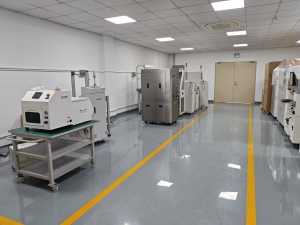
Export experience is useful evidence — 100% export to the EU, USA, AU, CA and ASEAN means the documentation routine already exists.
Frequently Asked Questions
Does the 12-month warranty start at shipment or at acceptance?
Motek's documented position is a 12-month warranty on all products, and the published material does not specify which event starts the clock. Treat this as a contract detail to settle in writing: name the trigger date — shipment, delivery or acceptance after the pre-shipment test — and state it in the order agreement. Buyers who leave the trigger undefined usually discover the gap when the first claim is filed.
Who performs quality control before an SMT line ships, and what evidence comes with it?
Motek's process places QA/QC inspectors inside the quality workflow, applies strict quality inspection before shipment, and names pre-shipment test as the acceptance criterion. The evidence to request is the inspection record or test report for your order, the sampling basis used, and the name of the person signing acceptance. Ask whether your own inspector or an appointed agency may witness the test before dispatch.
Do the CE certifications cover the entire turnkey line or each machine individually?
Motek holds multiple CE certifications, which is why the answer has to be checked at document level rather than at supplier level. CE marking applies per product and per applicable directive, so request the declaration of conformity for each machine and option in your configuration, confirm the described model matches your order, and identify which party holds the declaration. A certificate for a machine family is not automatically proof for a specific configured unit.
Which customization services are available, and do they affect MOQ or lead time?
Motek offers material replacement, label, packaging, color, size, logo and graphic design, supported by laser cutting, bending, assembling and debugging. Standard orders carry a minimum order quantity of 1 unit, and the sensible step is to confirm in writing whether a particular customization changes that minimum or the schedule. Also agree the approval loop and revision control, so a later repeat order cannot revert to an earlier artwork version.
What payment and delivery terms apply to repeat orders under a long-term arrangement?
Motek's documented commercial terms are a minimum order quantity of 1 unit, delivery terms FOB, CIF, EXW, FCA, DDP or DAF, and payment of 30% T/T in advance with 70% against copy of B/L, or 50% in advance and 50% against copy of B/L. For a partnership, confirm currency, quotation validity and whether the same basis carries into repeat orders, because that is where unplanned commercial drift usually appears.
How do spare parts and technical support work after the first year?
Motek's stated support measures include 24/7 technical support, fast repairs, spare parts supply, a comprehensive training system and a defined customer communication mechanism. Convert those into specifics: list the consumables your line will need — feeders in 8 mm, 12 mm and 24 mm formats, nozzles matched to Fuji, Yamaha or JUKI heads, belts and filters — and confirm the supply route and replenishment interval for each. A documented consumables plan is the practical measure of long-term fit.
If you are assembling that plan now, you can review the equipment range at Morel Equipments Co., Ltd. (Motek) or download the company brochure, and send a written list of warranty, inspection, conformity and customization questions for a matched response.
Conclusion: A Partnership Is a Documented Relationship
Four blocks decide whether an SMT turnkey supplier becomes a production partner or a one-time vendor. A warranty that names its start date and exclusions. A quality-control process that produces a report you can file. Conformity documents that match the configuration you actually bought. A customization route with an approval step, a revision number and a schedule commitment.
Motek's documented position — established in 2011 in Shenzhen, an R&D team of more than 15 engineers, annual output of 300 to 500 units exported entirely to the EU, USA, AU, CA and ASEAN, a 12-month warranty, multiple CE certifications, QA/QC inspection and a defined customization menu — gives a buyer something concrete to test rather than something vague to trust. The remaining work is yours: turn each stated term into a line in the agreement, and each open detail into a question answered in writing before the purchase order is issued.
Next step for buyers at the decision stage
Send your line configuration, target market and customization requirements to sales@morequip.com, or reach the team on WhatsApp at +86 199 2455 0176 and by phone at +86-755-21635007. Request the warranty terms, the pre-shipment test report format and the CE declaration relevant to your configuration in one document set.
Have Questions or Need More Details?
Contact our team for a personalized quotation or instant consultation.
Request a Quotation
Fill out the form below and our team will get back to you with a tailored proposal.
WhatsApp Direct Chat
Prefer to chat in real-time? Message us on WhatsApp for instant assistance & quick answers.
- Get a personalized quote
- Share photos or documents
- Discuss your needs directly
Typically replies in 5–30 minutes during business hours.