
SMT Turnkey: Aligning Pick-and-Place, Reflow, Dispenser
An SMT turnkey line rarely fails at the centre of a machine. It fails at the seams between machines. A placer that meets its placement specification, a reflow oven that holds its profile and a dispenser that repeats its deposit can still produce a line that misplaces parts, drifts out of profile after a changeover, or scraps boards that no single machine would have rejected. The usual cause is an interface that was never specified: a conveyor handshake, a deposit height, a support height, a program mapping, or a capacity figure that buyer and supplier define differently.
This guide is a specification sequence rather than a product tour. It sets out the parameter groups that must be aligned across the SMT Pick And Place Machine, the SMT Reflow Oven and the Automatic online glue dispenser, then shows how to convert those parameters into purchasing terms and acceptance items that can be checked before a line is signed off.
Motek (Morel Equipments Co., Ltd.) is a Shenzhen-based SMT equipment supplier and turnkey line integrator founded in 2011, exporting 100% of its output — 300 to 500 units a year — to the EU, USA, Australia, Canada and ASEAN markets. Its turnkey scope includes production line layout design, OEM/ODM customization and pre-shipment testing, and the three machines used as the reference set here are the Hanwha Decan S2 pick-and-place machine, the XMR-800D reflow oven and the HMH830D automatic online glue dispenser.
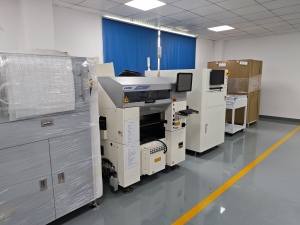
What parameter alignment means in an SMT turnkey line
Parameter alignment means that three interface layers are specified together, not machine by machine.
- Physical and board-handling interface. Board width and length range, thickness and support method, transfer height, transfer direction, and the handshake that decides when a board may leave one machine and enter the next.
- Process-window interface. The deposit the dispenser places, the height and force the placer uses, and the thermal profile the oven applies must keep the same assembly inside one qualified window.
- Data and verification interface. Component library, nozzle and feeder mapping, program revision, profile record and measurement method must be transferable, so a parameter can be reproduced after a changeover or a service visit.
The practical test is short: a parameter is only specified when it has an owner, a value with units, the conditions under which the value holds, and a method that proves it. A number without those four elements is a preference, and preferences are what turn into disputes at acceptance.
Why misalignment appears as yield loss instead of machine failure
Each machine is normally bought against its own datasheet, and the first comparison a buyer makes is machine against machine. That is the wrong first comparison, because datasheet values are measured under conditions the buyer rarely restates. A placement speed is quoted per head or per module; a reflow capability is quoted by zone count; a dispenser is quoted by deposit repeatability. None of these tells you what happens when all three are asked to work on the same board in the same cycle.
Take the dispenser-to-placer interface. If the deposit height and pattern are set without reference to the placer's placement height and nozzle contact force, the adhesive can spread beyond the intended area or sit too low for the component to seat cleanly. The placer still reports a geometrically correct placement, and the defect only becomes visible after reflow or at functional test. The machine did not fail; the interface was never qualified.
Take the reflow interface. A profile qualified on a board with one copper distribution does not transfer unchanged to a board with a different thermal mass. In a high-mix line the profile is the parameter most often carried over from the previous product, because it is the least visible, and the result is a process that stays inside specification for one product family and outside it for another.
Take the handshake. A dispenser cycle that finishes later than the placer expects forces either a wait state or a buffer, and a wait state that is not written into the cycle time becomes invisible capacity loss. The line still runs; the quoted output no longer matches the effective output.
The consequence for procurement is direct: acceptance should test the interface, not only the machine. The sections below show how to write that test into the order.
High-mix production makes every unaligned interface more expensive
For a high-mix manufacturer, the binding constraint is rarely a single product's peak speed. It is the number of parameters that must be re-proven at each changeover. A line that runs one product for a month can absorb a parameter that is slightly off, because an operator compensates once. A line that changes product several times a week cannot: every parameter that is not documented becomes a re-learning cost at every switch.
This is also why verification equipment keeps attracting investment. Research and Markets (GlobeNewswire, October 2026) estimates a 15.2% compound annual growth rate for the inspection segment over 2026–2033, driven by AI-assisted 3D AOI and SPI. For a buyer, the practical reading is not the growth rate itself but the direction it points: measurement capability is becoming easier to specify, while the parameters being measured still have to be defined by the buyer and the integrator together.
The three parameter groups to lock before comparing quotes
Pick-and-place parameters that constrain everything downstream
The placer fixes the physical limits the other two machines must live with, so its parameters are specified first.
- Board-handling envelope: width and length range, thickness range, top and bottom clearance, support method, transfer height and direction.
- Feeder and nozzle set: which tape-width families the component mix needs (8 mm, 12 mm and 24 mm are the usual split), the nozzle type per component class, and how nozzles are identified. Motek's nozzles can be engraved with letters rather than carrying a QR code, which matters when a nozzle set is shared across shifts and machines.
- Placement height, force and vision: the values used for the tallest and the most fragile components in the mix, and the fiducial strategy that keeps them repeatable.
- Program and component library: who owns the library, how revisions are numbered, and how a program is restored after a controller service.
Rated speed needs a separate warning. Fuji specifies a maximum mounting speed of 37,500 CPH per module for the NXT III H24G high-speed head (Fuji America, July 2026), a figure tied to that head and that module. A line-level capacity claim that does not name the head and module configuration cannot be compared with another supplier's claim, and it cannot be used as an acceptance criterion.
Reflow parameters that follow the paste and the board, not the brochure
An oven is not aligned because it has more zones. It is aligned when the profile it produces for a given board family stays inside the paste supplier's window across a full production shift, and when that profile can be reproduced.
- Zone setpoints and conveyor speed per board family, not one averaged profile shared across the mix.
- Cooling behaviour and, where used, atmosphere, both of which change the window rather than the setpoints alone.
- Board support and width capability, which must accept the same envelope as the placer and the dispenser.
- Profile recording: the method, the retention period, and who can retrieve a record after a quality complaint.
IPC-7801, the IPC reflow oven process control standard published in 2015, is a useful reference when writing these items, because it addresses process control rather than one machine specification. Referencing it in an acceptance annex gives both sides the same vocabulary without asserting that a particular oven is certified to it.
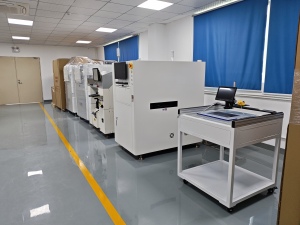
Dispenser parameters that decide whether placement stays accurate
The dispenser has the least visible output of the three machines, which is why its parameters are the ones most often left at the supplier's default. They should be treated as placement parameters, because that is what they become.
- Deposit control: dispense time and pressure or valve setting, needle or valve type, dispense height, travel speed and pattern geometry (dot, line or area).
- Timing: the interval between dispense and placement, and any cure or wait step the adhesive requires before the board may be handled.
- Vision and offset: how the dispenser locates the fiducial and how its offset is verified against the placer's coordinate system.
- Handshake and buffering: transfer timing to the placer, and whether a buffer is required to protect the cycle.
From production requirements to aligned specifications: a seven-step sequence
The sequence matters more than any individual number, because each step constrains the next.
- Fix the product envelope and the changeover set. List the board families, component classes and panelization the line must handle, then count how many distinct parameter sets that implies. That count is a specification item: a line asked to hold twelve parameter sets needs a different documentation and verification effort from one that needs two.
- Specify the board-handling interface before any performance figure. Transfer height and direction, width range, support method and handshake should be identical across the three machines and any loader, unloader or buffer in the line.
- Derive the reflow window from the paste and the board, then require oven capability. Start from the paste supplier's window and the board's thermal mass, then check which oven configuration can hold that window repeatably. Do not start from the zone count.
- Derive the dispense requirement from the bond pattern, then constrain placement. The pattern and deposit size set dispense height and timing; those in turn set the placement height and force the placer must use at that station.
- Define data handover. Program format, component library ownership, nozzle and feeder mapping, revision numbering and backup method should be written as deliverables with a named recipient on the buyer's side.
- Define capacity in one agreed unit. State whether the figure is rated or effective, which head and module configuration it assumes, whether changeover is included, and over what period it is measured. A capacity figure without those qualifiers cannot be tested.
- Convert every item into an acceptance line. Each parameter needs a method, a record and a pass condition, so the final test measures the interface rather than the brochure.
What the turnkey scope should include on the supplier side
Several alignment tasks sit between machines rather than inside them, which is exactly the part a multi-vendor purchase tends to leave unowned.
Motek's stated turnkey scope covers those gaps in four ways. Production line layout design addresses the physical and handshake layers before shipment. OEM/ODM customization covers voltage, logo, label, packaging, color, size, graphics and material, which matters when a line is configured for EU or North American power and documentation requirements. Training is offered as an optional remote or on-site service, and buyers' engineers can travel to China for approximately one week of training. Quality control is stated as 100% pre-shipment testing, which is also the stated acceptance criterion.
The minimum order quantity is one unit. For a buyer at the evaluation stage this changes the validation path: a single machine, or a single interface pair, can be ordered and tested before the whole line is committed, instead of treating the line as one indivisible purchase.
The supplier profile behind that scope is a Shenzhen facility of 955 m², founded in 2011, with 100% of output exported. Those facts are relevant to alignment only because they define the power configurations, documentation language and shipment destinations the line has to satisfy — not because facility size improves a process window.
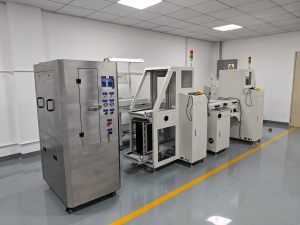
From the parameter schedule to purchasing terms
A parameter schedule only has commercial force if the purchase documents reference it. The terms below are the documented Motek terms; the parameter annex is what makes them testable.
| Commercial or compliance item | Documented value |
|---|---|
| Minimum order quantity | 1 unit |
| Lead time | 7–45 days |
| Delivery terms | FOB, CIF, EXW, FCA, DDP, DAF |
| Payment terms | 30% T/T in advance with 70% T/T against copy of B/L, or 50% T/T in advance with 50% T/T against copy of B/L |
| Acceptance criterion | Pre-shipment test |
| Quality control | 100% pre-shipment test |
| Customization scope | Voltage, logo, label, packaging, color, size, graphics, material; production line layout design; optional remote or on-site training |
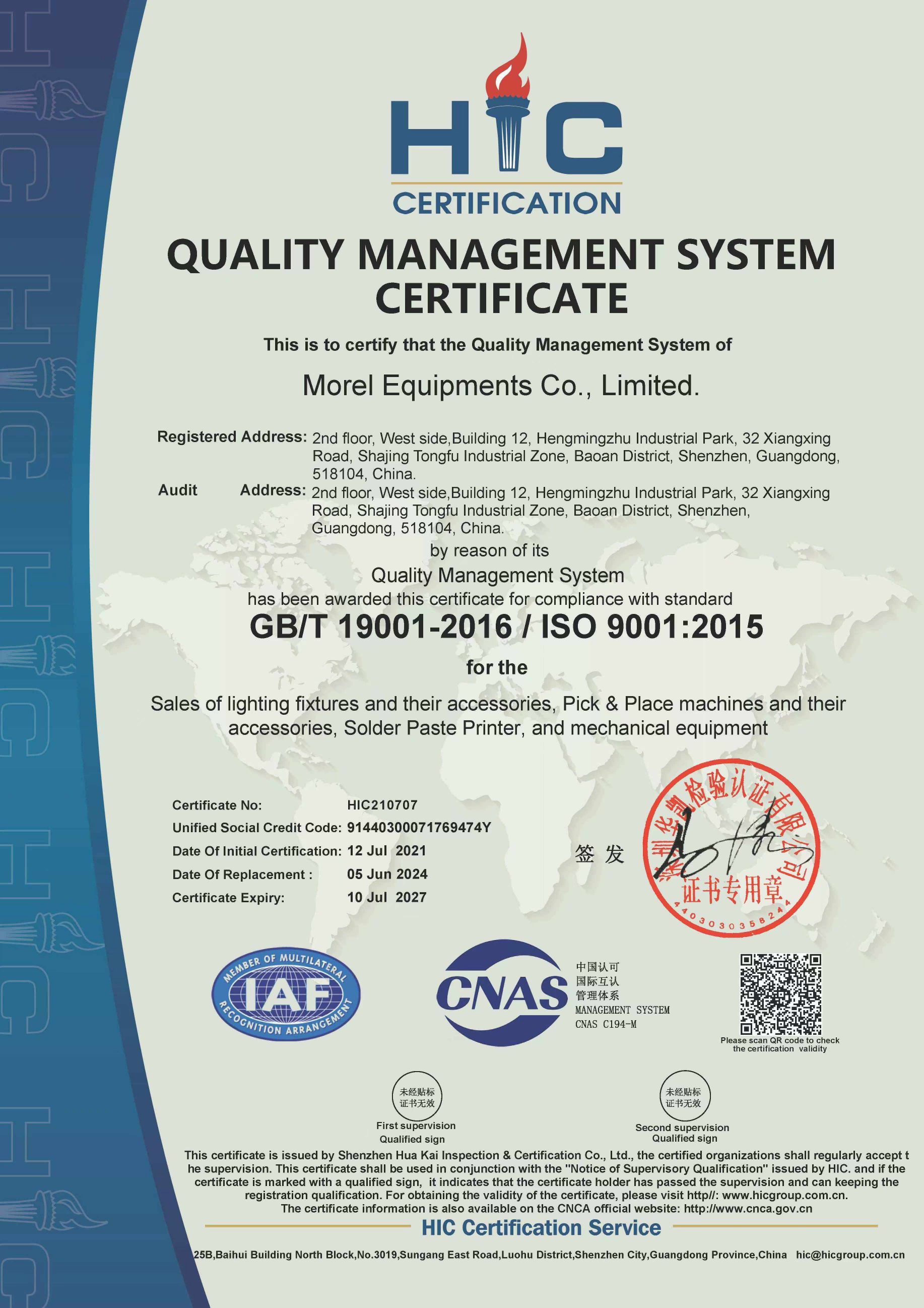
| Certification and registration | ISO 9001:2015 certificate HIC210707 (valid to 2027-07-10); Machinery Directive Attestation of Conformity M.2023.206.C91284 (valid to 2028-10-10, scope ICT Handler PMP-2000L / PTI-2000L); VerpackG registration DE2364478064729 |
Two items deserve specific attention. First, the acceptance criterion is stated as a pre-shipment test, so the annex should define what that test contains — otherwise tested is a claim rather than a record. Second, delivery terms are offered as FOB, CIF, EXW, FCA, DDP and DAF; the choice determines where cost and risk transfer, and therefore who handles transport damage and customs documentation. Because a turnkey line is made up of several units, the delivery term should be agreed per shipment rather than per order line.
Acceptance and verification: proving alignment before sign-off
Acceptance is where a guide either becomes a contract or stays an intention. The documented acceptance criterion is a pre-shipment test, and the buyer's annex should give that test content: a parameter log per machine, one recorded profile for each board family, the deposit verification method with a retained pattern sample, the placement verification method, the program and component library backup, the nozzle and feeder mapping list, and the spare-parts list.
Compliance documents need the same treatment, because certificate scope is narrower than brand reputation. Motek holds ISO 9001:2015 certificate HIC210707, issued by Shenzhen Hua Kai Inspection & Certification on 12 July 2021 and valid to 10 July 2027, with a stated scope covering sales of lighting fixtures and their accessories, pick-and-place machines and their accessories, solder paste printers, and mechanical equipment. Motek also holds Machinery Directive Attestation of Conformity M.2023.206.C91284, issued by UDEM on 11 October 2023 and valid to 10 October 2028, whose stated scope is the ICT Handler (Morel / PMP-2000L, PTI-2000L) against 2006/42/EC Annex VIII, EN 60204-1:2018, EN ISO 12100:2010 and EN 61010-1:2010+A1:2019. Separately, registration DE2364478064729 under the German Packaging Act (VerpackG, § 9 and § 26), issued by ZSVR on 21 December 2022, covers registration as a manufacturer of filled packaging for the EU market.
The practical rule: a scope that names models or product families should be matched to the exact machines in the quotation. A certificate covering a product family in general terms is evidence of a management system, not proof that every machine in the line sits under the same attestation, and the buyer should ask which document applies to each model.
Where alignment work is decisive: recorded applications
Motek's project records include an SMT factory case spanning Germany, Israel, India and Australia, with 20 to 35 units delivered over a five-year relationship. The recorded applications are smartphone motherboard assembly, tablet circuit board production, ECU control unit assembly, LED display modules, LED streetlight drivers and consumer electronics smartphone PCB assembly at 50,000 units per month, with mass production recorded at 20,000 to 100,000 pieces per day.
Read as a specification example rather than a benchmark, that mix explains why interface parameters dominate. Smartphone boards and LED drivers sit at opposite ends of the thermal-mass range, so one reflow profile cannot serve both without separate parameter sets. ECU assembly usually carries tighter traceability expectations, so the profile record and program revision control move from convenience to requirement. A high-volume consumer board rewards cycle-time work at the handshake, while a lower-volume display board rewards changeover documentation. The line is the same; the parameters that decide its performance are not.
Recorded output ranges depend on product mix, shift pattern and line configuration, so they describe what the documented case achieved rather than what another factory should expect.
Alignment matrix for the three core machines
The matrix below converts the discussion into specification rows. It states what to lock, what each group constrains and what evidence should be produced, using the machine names in the reference configuration.
| Machine | Parameter group to lock | What it constrains | Evidence to require |
|---|---|---|---|
| SMT Pick And Place Machine (Hanwha Decan S2) | Board-handling envelope; feeder tape-width set; nozzle map and identification; placement height, force and vision; program and component library | Dispense height and pattern; oven board support and width; changeover time and parameter-set count | Parameter log, nozzle and feeder list, program backup, stated placement verification method |
| SMT Reflow Oven (XMR-800D) | Profile per board family; conveyor speed; cooling behaviour; atmosphere where used; board support and width | Paste process window; adhesive cure; board thermal mass across the product mix | One recorded profile per board family, with retention and retrieval method |
| Automatic online glue dispenser (HMH830D) | Deposit time and pressure or valve setting; needle or valve type; dispense height; pattern geometry; interval before placement; vision offset | Placement accuracy and nozzle contact force; cure schedule; transfer handshake timing | Deposit verification method, retained pattern sample, handshake test record |
| Line-level documentation | Parameter-set index, revision numbering, acceptance annex, spare nozzle and feeder mapping | Reproducibility after changeover, service visit or shift change | Signed annex referenced in the purchase order, plus pre-shipment test records |
Frequently asked questions
Which certificates should I verify before ordering an SMT turnkey line, and what do they actually cover?
Motek holds ISO 9001:2015 certificate HIC210707, issued by Shenzhen Hua Kai Inspection & Certification on 12 July 2021 and valid to 10 July 2027; its stated scope covers sales of pick-and-place machines and their accessories, solder paste printers and mechanical equipment. The Machinery Directive Attestation of Conformity M.2023.206.C91284 (UDEM, issued 11 October 2023, valid to 10 October 2028) names the ICT Handler (PMP-2000L, PTI-2000L) as its scope, and registration DE2364478064729 covers packaging obligations under the German Packaging Act. Because scopes name product families and models, confirm in writing which document applies to each machine in your configuration.
Can the pick-and-place, reflow and dispensing equipment be customized to a specific line?
Yes. Motek's documented capability is OEM/ODM customization covering voltage, logo, label, packaging, color, size, graphics and material, together with a personalized service plan and production line layout design. Training can be delivered remotely or on site as an option, and nozzles can be engraved with letters instead of carrying a QR code. Customization should be listed in the order documents, because voltage, packaging and color changes affect delivery planning.
Which parameters must be agreed in writing before the line is accepted?
Seven groups: the board-handling envelope and transfer handshake; feeder tape-width families and nozzle mapping; placement height, force and vision strategy; dispense parameters including deposit control, height, pattern and the interval before placement; one reflow profile per board family with conveyor speed and cooling; program and component library handover with revision control; and a capacity figure stated as rated or effective with its head and module configuration. Each group should carry a verification method and a pass condition in the acceptance annex.
What are the purchasing terms and acceptance criteria?
MOQ is 1 unit. Delivery terms offered are FOB, CIF, EXW, FCA, DDP and DAF. The acceptance criterion is a pre-shipment test. Payment terms are 30% T/T in advance with 70% T/T against a copy of the B/L, or 50% T/T in advance with 50% T/T against a copy of the B/L. The pre-shipment test should be supported by a parameter annex so the test has defined content rather than a generic statement.
Can a single machine be ordered to validate an interface before committing to a full line?
The minimum order quantity is 1 unit, so a single machine or a single interface pair can be ordered as a validation step, and the acceptance criterion remains a pre-shipment test. It is worth defining which parameters the single unit must demonstrate — for example the transfer handshake between the dispenser and the placer — so the test produces a record that can be reused when the rest of the line is ordered.
What lead time applies to an SMT turnkey order?
The documented lead time is 7–45 days. The position within that range depends on the configuration, on which customization items are selected and on the delivery term, so the confirmed date should be written into the order rather than inferred from the general range.
What support is available after delivery, and how does a buyer start a specification review?
Support includes remote technical support and 24/7 online service, plus optional remote or on-site training; buyers' engineers can also travel to China for approximately one week of training. To start a specification review, send the board envelope, component mix and target output to sales@morequip.com, or request the company brochure at https://cdn.socialarks.com/sbsp//common/2026/0327/69c5dac62c370.pdf for the full product list.
Conclusion
Aligning an SMT turnkey line is a documentation exercise before it is a technical one. The placer sets the board-handling envelope, the feeder and nozzle mapping, and the placement height and force; the dispenser turns those into a deposit, a pattern and a timing requirement; the oven has to hold a profile for every board family that the first two machines accept. Each of those is an interface, and an interface is only specified when it has a value, a condition and a test.
Buyers who write the parameter schedule first, attach it to the purchase order, and give the pre-shipment test a defined content get two things that a machine-by-machine comparison cannot provide: a line that can be re-qualified after a changeover, and an acceptance conversation that references records instead of opinions.
Motek (Morel Equipments Co., Ltd.) publishes its product and company details on morequip.com. Buyers preparing a specification can request the company brochure or send the board envelope, component mix and target output to sales@morequip.com (tel. +86-755-21635007) so the parameter schedule is reviewed against a proposed configuration before the order is placed.
Have Questions or Need More Details?
Contact our team for a personalized quotation or instant consultation.
Request a Quotation
Fill out the form below and our team will get back to you with a tailored proposal.
WhatsApp Direct Chat
Prefer to chat in real-time? Message us on WhatsApp for instant assistance & quick answers.
- Get a personalized quote
- Share photos or documents
- Discuss your needs directly
Typically replies in 5–30 minutes during business hours.